
Immuno-oncology
An Introduction to Immuno-oncology
Inflammatory immune cells are involved in tumour development and dissemination. As the tumour develops, cancer cells evolve different mechanisms in order to evade attack, by avoiding the immune recognition and developing an immunosuppressive microenvironment. Harnessing the patient’s immune system to attack the tumour is the key principle of immunotherapy. Several classes of immunotherapies including cytokines, monoclonal antibodies against immune checkpoints, autologous dendritic cells expressing tumour antigen, genetically engineered oncolytic viruses and T-cells engineered to expressed chimeric antigen receptors (CAR-T cells), have been approved for many cancer subtypes, including solid tumours and haematological malignancies. Current challenges include elucidating predictive biomarkers, since many people fail to respond to these therapies.
Browse video highlights and short articles from the conference hub, providing insights into the latest updates from major conferences. This is complemented by a range of educational activities from our expert faculty, with patient outcomes at the forefront.
Our supporting partners do not constitute an endorsement of the content on this page.
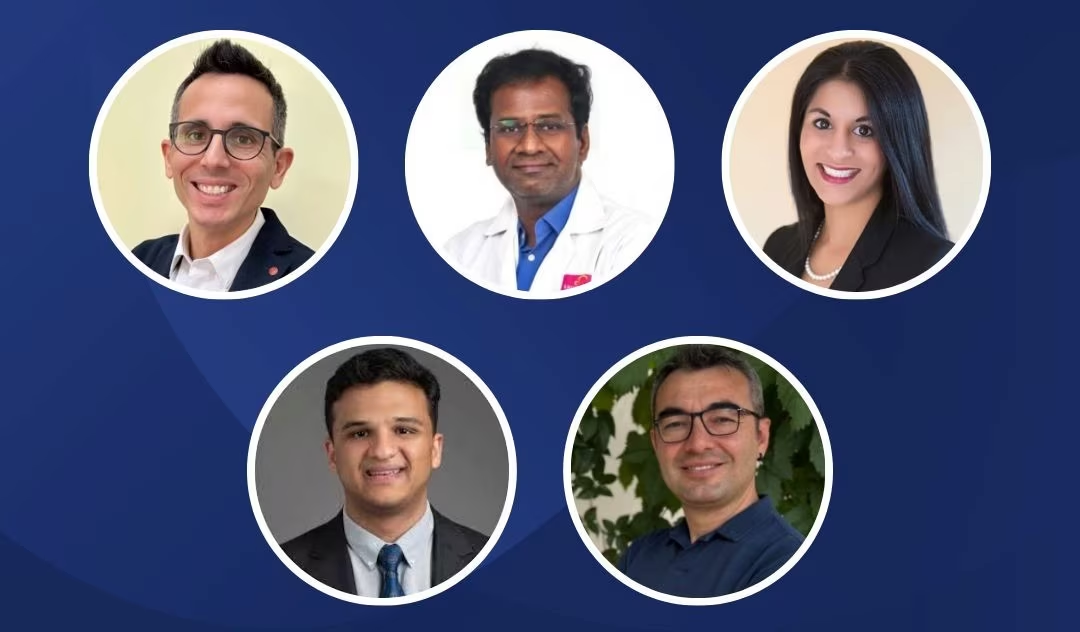
As the field of immunology continues to evolve, staying ahead of the curve has never been more critical. As we welcome the new year, we asked our touchIMMUNOLOGY 2025 Future Leaders to share the developments they believe will shape the future of the field. Here, they highlight five emerging areas poised to influence clinical practice—not only in the year ahead, but for years to come.
In 2025, major advances have taken place across the field of immunology, from precision immunomodulation to cell, gene and AI-driven therapies that are reshaping clinical practice. We asked five members of the 2025 touchIMMUNOLOGY Future Leaders to highlight the developments they believe have been most impactful this year.

Early identification of premalignant upper gastrointestinal (UGI) conditions is vital for improving cancer outcomes, yet prevalence and detection rates remain poorly defined. The PROSPERO study, a prospective UK-based investigation, evaluated over 1,000 endoscopy patients to determine the prevalence of pre-malignant UGI lesions and associated risk factors. Findings reveal a higher-than-expected rate of premalignant stomach and esophageal lesions, highlight the value of narrow band imaging in detection, and underscore the need for improved endoscopist training and awareness. In this interview, Dr Andreas Hadjinicolaou (University of Cambridge) discusses how these insights could inform early detection strategies and enhance patient outcomes in UGI cancer care.

In this episode of Visionary Voices, we welcome Associate Professor Grace Vincent from CQUniversity’s Appleton Institute. A leading expert on sleep and shift work, Grace explores how disrupted sleep affects physician health in both the short and long term, as well as its impact on safety and performance. We also discuss what this means for patient outcomes and share practical strategies to manage sleep loss.
As touchIMMUNOLOGY approaches 5 years of providing education for busy healthcare professionals involved with immune-related conditions, we are looking to the future—and it certainly looks bright! This year, we are celebrating our inaugural touchIMMUNOLOGY Future Leaders to recognize the outstanding talent that has entered our field in recent years. These individuals are set to innovate and transform the field in the years to come.

Dr Andreas Hadjinicolaou, Future Leader in gastroenterology, shares his journey at the intersection of clinical care and cutting-edge research in early cancer detection. In this Q&A, he reflects on balancing patient care with innovation, the technologies transforming the field, and his vision for more equitable, accurate, and proactive approaches to diagnosing gastrointestinal cancers.

As touchIMMUNOLOGY approaches 20 years of providing education for busy immunologists, we are looking to the future—and it certainly looks bright!

Physician burnout is at a critical point. In this episode, Nicky speaks with Dr Alfred Atanda about why so many physicians are burning out and what can be done to change the trend. From personal experience to system-wide solutions, Dr Atanda shares valuable insights on improving physician well-being and building a more effective healthcare culture.

What if your medical degree could launch more than a clinical career? In this candid and compelling read, Dr Jon Edelson shares his lessons for early-career doctors ready to think beyond the bedside and explore the business of medicine.

In this episode, we explore the future of continuing medical education (CME) with the team behind touchIME. Hannah Fisher and Matthew Goodwin share insights into global and US trends, the importance of patient inclusivity and how educational outcomes are evolving to better measure the direct impact of learning on clinical practice and patient care.

Immuno-oncology is at the heart of Dr Hassan Abushukair’s inspiring journey from Jordan to the USA. A rising star in the field, Hassan combines clinical expertise and bioinformatics to unravel the immune system’s role in cancer, advancing precision medicine. With over 20 publications and prestigious awards, he is paving the way for innovative therapies while championing mentorship and patient-centred research.

Antibody-cytokine fusion proteins are a promising immunotherapy that could overcome off-target immune cell activation and the short serum half-life associated with low-dose interleukin-2 treatment. We were delighted to talk with Dr. Jamie Spangler (Johns Hopkins University, Baltimore, MD, USA) around ...

A defective DNA damage response in cancer cells can lead to genomic instability and impact the immunogenicity of tumours, improving the efficacy of immunotherapy treatment approaches. It was a pleasure to talk with Professor Sandra Demaria (Weill Cornell Medicine, New ...
A defective DNA damage response in cancer cells can lead to genomic instability and impact the immunogenicity of tumours, improving the efficacy of immunotherapy treatment approaches. We were delighted to talk with Professor Sandra Demaria (Weill Cornell Medicine, New York, ...

A joint analysis of patients receiving immune checkpoint inhibitor therapy was conducted using the OnCovid (NCT04393974) and ESMO CoCARE registries, this assessed SARS-CoV-2 outcomes in vaccinated and unvaccinated patients with cancer and whether prior immune-related adverse events affected these outcomes. ...


Dr Marco Ruella (University of Pennsylvania, Philadelphia, PA, USA) discusses his presentation at the 63rd ASH Annual Meeting & Exposition on resistance mechanisms to CAR-T cells in patients with B-cell acute lymphoblastic leukemia. (PART THREE) Question What questions remain unanswered ...
Log into your Touch Account
Keep track of your clinical interests and newsletter subscriptions.
Sign up with an Email
Or use a .
Register now for FREE access
Already registered? Login below.
