


Letter from the Editor-in-Chief
Dear readers, It is a great pleasure to take on the role of Editor-in-Chief of touchREVIEWS in RMD, and I am grateful for the opportunity to introduce myself and to share my vision for the journal. I am a Professor of Rheumatology at Université Paris Cité and a consultant rheumatologist at Hôpital Cochin (AP-HP) in […]
Who’s on your bench? The five people every high performer needs
Your clinical career is shaped not only by what you know, but by who helps you navigate what comes next. Join us for the final episode in our mini-series exploring non-clinical skills that can help you thrive in your clinical career. Today we explore how to develop the right team around you to support your work, and what building that bench can mean for your career, and the life you build alongside it.
A community-based model for identifying and managing frailty in older adults
Frailty is a common and significant issue among older Australians, linked to poorer health outcomes and reduced resilience, yet it frequently goes undetected in primary care due to limited routine screening, and despite encouraging results from international community-based care models, there is still a lack of strong evidence within Australian primary care settings. In this Q&A, Dr Joyce Mcswan discusses the implementation and findings of the “Frailty in Community” program, Australia’s first integrated primary care program for frail and at-risk older adults.
Precision medicine and therapeutic innovation: Clinical trial highlights from ECCO'26
The 2026 European Crohn’s and Colitis Organization (ECCO) congress showcased an evolving clinical landscape, highlighting advances in biomarker-driven care, novel oral agents targeting key inflammatory pathways, and long-term real-world outcomes of established biologics and advanced therapies. Across ulcerative colitis (UC) and Crohn’s disease (CD), the meeting underscored a shift toward precision medicine, earlier optimization of therapy, and sustained disease modification. We summarize the most impactful clinical trial data presented at ECCO'26, focusing on therapeutic innovations, comparative effectiveness studies, and long-term results shaping the future of IBD management.
01. Letter from the Editor-in-Chief
02. Who’s on your bench? The five people every high performer needs
03. A community-based model for identifying and managing frailty in older adults
04. Precision medicine and therapeutic innovation: Clinical trial highlights from ECCO'26

Practical, actionable insights to help pediatric and adult rheumatologists better understand the transition period and deliver the best supportive care to adolescents with JIA. For young people living with juvenile idiopathic arthritis (JIA), moving from pediatric to adult care is ...

At the American College of Rheumatology (ACR) Convergence 2025, Dr. Pamela Weiss delivered a focused presentation on the diagnosis and management of axial juvenile spondyloarthritis (axJSpA), highlighting key distinctions and overlaps with adult-onset disease. This targeted article synthesizes the principal objectives ...

Digital health encompasses technologies such as mobile apps, telemedicine, wearables, software and artificial intelligence (AI) that enhance remote, efficient healthcare delivery.1,2 In rheumatic and musculoskeletal diseases (RMDs), these tools address the need for continuous monitoring, early intervention and patient engagement.3,4 ...

Autoimmune rheumatic diseases (AIRDs) predominantly affect women during their reproductive years and are associated with increased risks of infertility and adverse pregnancy outcomes (APOs). These diseases, such as systemic lupus erythematosus (SLE), antiphospholipid antibody syndrome (APS) and rheumatoid arthritis (RA), ...



Want to be featured in touchReviews in RMD?
Share your knowledge, influence clinical practices and enhance patient care in Immunology today!
- Peer-reviewed, free-to-access
- Accepting reviews, research and editorials
- No article processing fees
- Digital features and plain language summaries
- Multichannel content distribution for maximum visibility
Your clinical career is shaped not only by what you know, but by who helps you navigate what comes next. Join us for the final episode in our mini-series exploring non-clinical skills that can help you thrive in your clinical career. Today we explore how to develop the right team around you to support your work, and what building that bench can mean for your career, and the life you build alongside it.

We often focus on clinical excellence, but spend less time developing broader skills that could help us better lead with purpose and build more fulfilling, impactful careers. In this episode, part of a mini-series in partnership with LEADderm, Dr Jennifer Soung and Denise Mann explore how clinicians can engage with the media to educate, empower and extend their impact beyond the clinic.
Dear readers, It is a great pleasure to take on the role of Editor-in-Chief of touchREVIEWS in RMD, and I am grateful for the opportunity to introduce myself and to share my vision for the journal. I am a Professor ...

The landscape of rheumatic and musculoskeletal disease research continues to evolve at pace, driven by scientific innovation, interdisciplinary collaboration and an increasing appreciation of the heterogeneity and complexity of the conditions we treat. As we welcome readers to touchREVIEWS in ...

Interstitial lung disease (ILD) is recognized as one of the most frequent and potentially life-threatening pulmonary complications of systemic autoimmune rheumatic diseases (SARDs), a group of rare chronic inflammatory conditions characterized by autoimmune system dysregulation and chronic systemic inflammation. ILDs ...

The importance of multi-disciplinary clinics for the assessment of patients with interstitial lung disease (ILD) is well established, and these are usually led by chest physicians.1 The role of rheumatologists in such a setting has evolved more recently.2 The main ...

Whether you’re working in an agency, in a clinical role, or in academia, many healthcare professionals wonder what lies behind the doors of the pharmaceutical industry. In this episode, Gina is joined by Sian Kneller, Director of Global Content Design at GSK and Founder of The Agency Advantage, to unpack exactly what it takes to make the leap. With over 20 years’ experience, from medical writer to leading global medical affairs strategy, Sian now helps others make a successful move into pharma. In this episode she shares what the transition really looks like, which transferable skills matter most, and how you can stand out in a competitive field.

Virtual reality (VR) is an emergent technology with the potential for genuine impact as a novel, immersive digital therapeutic in healthcare. Within rheumatological conditions, pervasive symptoms including chronic pain and kinesiophobia (fear of movement) are difficult to manage using conventional ...

S3E3_Could senolytics change the treatment landscape of age-related diseases? In this episode, Nicky speaks with Prof. Georgina Ellison-Hughes from King’s College London about the groundbreaking field of senolytics and their potential to advance the treatment of age-related ...

Why do we need to identify arthritis? In children, joint pain occurs frequently; it is usually associated with activities or accidental falls and is generally short-lived. A small proportion of children have more persistent joint pain, and in this group, ...

In this episode we explore the concept of syndemics, how biology, society and the environment interact to shape health outcomes. We are joined by Dr Elena Nikiphorou (King’s College London), who is pioneering the use of syndemic thinking in inflammatory arthritis, and Dr Lisa Hamzah (St George’s Hospital, London), whose experience in HIV research offers unique insight into how this approach can transform care. Together we discuss how applying this framework, first developed in HIV research, could improve care for people with rheumatic and musculoskeletal diseases (RMDs) and help advance global health equity.

In this episode of Visionary Voices, we welcome Associate Professor Grace Vincent from CQUniversity’s Appleton Institute. A leading expert on sleep and shift work, Grace explores how disrupted sleep affects physician health in both the short and long term, as well as its impact on safety and performance. We also discuss what this means for patient outcomes and share practical strategies to manage sleep loss.


Explore practical approaches to recognising and managing hereditary angioedema (HAE) to optimise treatment outcomes and improve quality of life for patients living with the disease.


Introducing the touchIMMUNOLOGY Future Leaders 2025
This year, we are celebrating our inaugural touchIMMUNOLOGY Future Leaders to recognize the outstanding talent that has entered our field in recent years. These individuals are set to innovate and transform the field in the years to come.
Representing a diverse range of expertise from across the globe, these highly accomplished clinicians are among the brightest minds shaping the future of immunology. We had the pleasure of learning about their unique career journeys, motivations and the inspirations that have guided their paths. They also shared their perspectives on the most exciting developments in immunology today, along with their hopes for the future of the field.
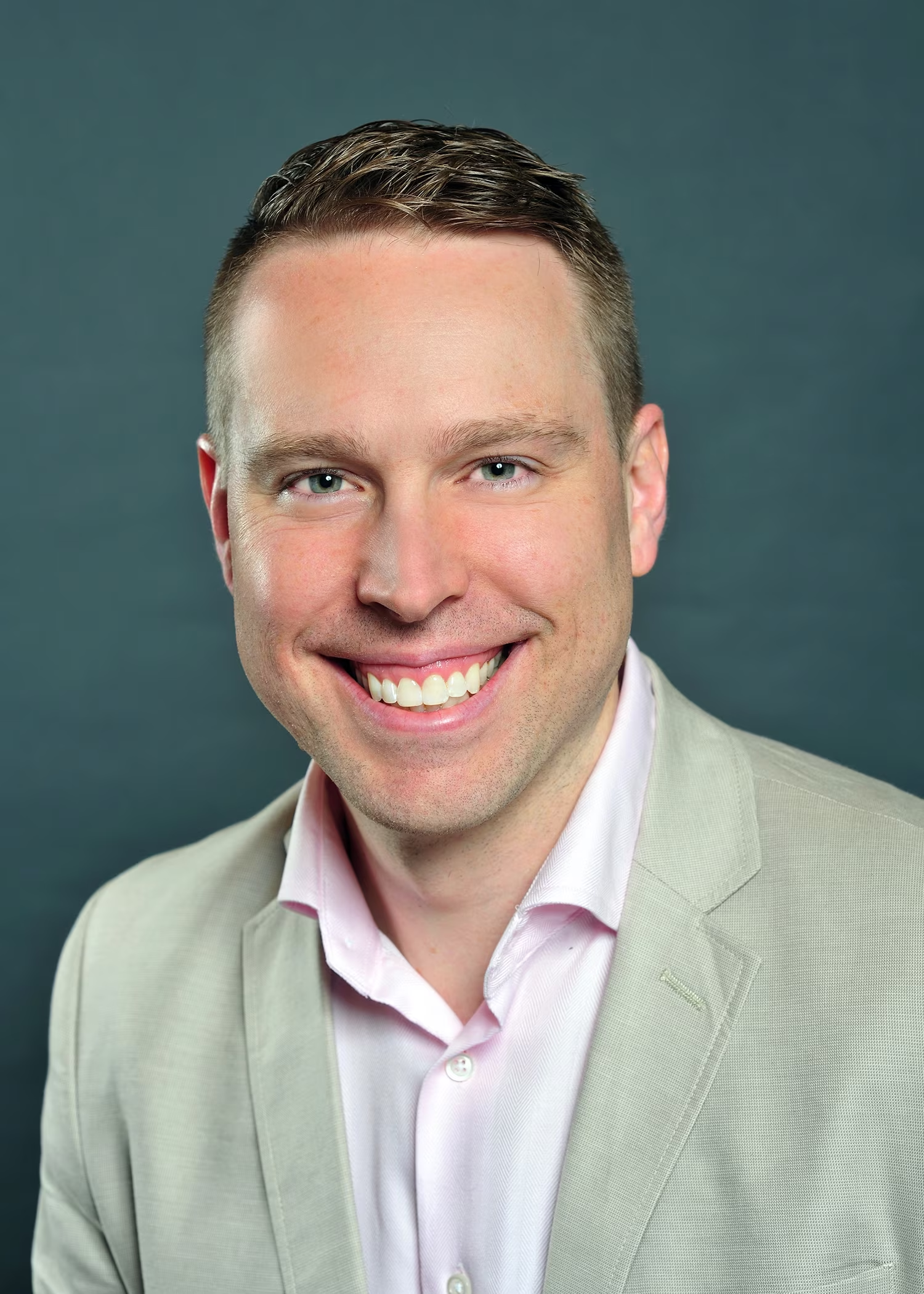
“My advice to aspiring clinician-scientists is to embrace this dual role, maintaining clear boundaries and leveraging the strengths each domain brings to the other.”

“It truly takes a village to raise a physician-scientist, and I am very grateful for all the individuals who have helped me along my career path.”

“Precision medicine is a hope we all have, but I think what we all still struggle with is the translation from the wet lab to the clinic.”
“My long-term ambition is to make the management of AIRDs more patient-centric. I would like to empower patients by making them more aware of the disease, the management and expected outcomes.”

“With an enormous work-force shortage looming in rheumatology, a focus on mentorship and training is more important than ever.”




Editorial Board
Introducing the Editorial Board of touchREVIEWS in Immunology, who support our mission to advance medical knowledge and practice by ensuring the integrity, relevance, and impact of the content we publish. Together, we strive to foster a vibrant academic community and contribute to the continuous improvement of healthcare worldwide.

Peter Taylor
University of Oxford, Oxford, UK
Rheumatoid Arthritis
Biography
Peter C Taylor holds the Norman Collison chair of musculoskeletal sciences at the University of Oxford and is a Fellow of St. Peter’s College. He is Head of Clinical Sciences at the Botnar Research Centre within the Nuffield Department of Orthopaedics, Rheumatology and Musculoskeletal Sciences. He studied pre-clinical medical sciences at Gonville and Caius College at the University of Cambridge and his first degree was in Physiology. He subsequently studied clinical medicine at the University of Oxford and was awarded a PhD degree from the University of London for research on pathogenesis of arthritis. Professor Taylor has specialist clinical interests in inflammatory arthritis. He has over 25 years’ experience in clinical trial design in studies of biologic and small molecular therapies in rheumatoid arthritis and ankylosing spondylitis. In experimental medicine studies, Professor Taylor employs targeted therapies as probes of pathogenesis to investigate the in vivo biology of the target in the pathobiology of the disease phenotype under investigation.
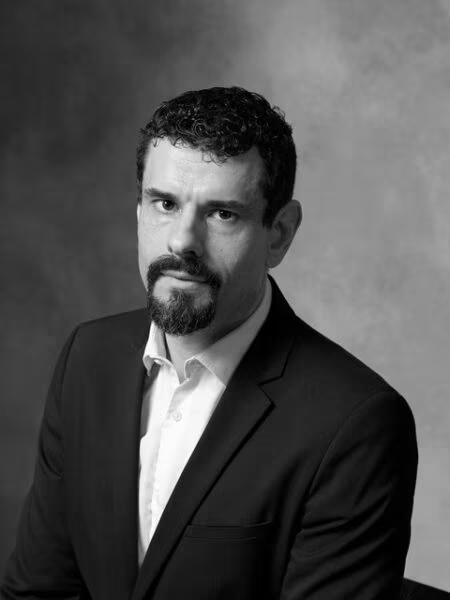
Jérôme Avouac
Editor-in-Chief

Michael Nurmohamed
Amsterdam, The Netherlands
Preventive cardiology in rheumatology
Biography
Michael T. Nurmohamed, MD PhD, is Professor Emeritus of Rheumatology and a consultant rheumatologist affiliated with the Amsterdam Rheumatology & Immunology Center at Reade and Amsterdam UMC, The Netherlands. His academic career has focused on the interface between inflammatory rheumatic diseases and cardiovascular disease, with a particular emphasis on cardiovascular risk management and prevention in conditions such as rheumatoid arthritis, psoriatic arthritis, axial spondyloarthritis and gout. He has played a leading role in European and international guideline development, including as convenor and chair of multiple EULAR task forces and study groups addressing cardiovascular involvement in inflammatory arthritis. His work has contributed to improved understanding of inflammation-driven atherosclerosis and to the implementation of cardiovascular risk assessment strategies in rheumatology care. Professor Nurmohamed has authored and co-authored numerous peer-reviewed publications and remains actively involved in international collaborations, clinical trials and educational initiatives. Following his emeritaat in November 2025, he remains actively involved in research, epidemiology, mentoring and international advisory roles within the rheumatology community, with a strong commitment to advancing interdisciplinary education and collaboration.
Peter Taylor
Honorary Board Member
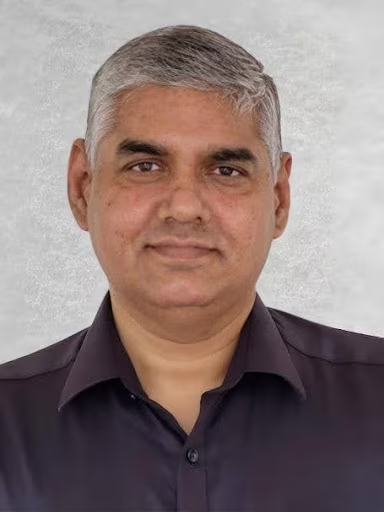
Vinod Ravindran
Editorial Board
Vinod Ravindran
Centre for Rheumatology, Calicut, Kerala
Rheumatic Diseases
Biography
Dr Vinod Ravindran’s clinical career includes training and consultant roles at premier institutions, such as King’s College Hospital, London and St. George’s University Hospital, London, Ipswich and Maidstone, UK. Currently, he serves as the Director of the Centre for Rheumatology in Calicut, Kerala, India, where he leads comprehensive rheumatology services with a strong focus on multidisciplinary care.
In addition to his clinical leadership, he is an Adjunct Professor of Medicine at the Kasturba Medical College, Manipal, Karnataka, where he teaches postgraduates and supervises PhD research. He is the president-elect of the Indian Rheumatology Association. He has a keen interest in reproductive rheumatology and is the co-convener of the APLAR SIG for Women’s Health in AIRDs and Convener of the Indian Rheumatology Association’s Reproductive Rheumatology SIG.
Michael Nurmohamed
Editorial Board
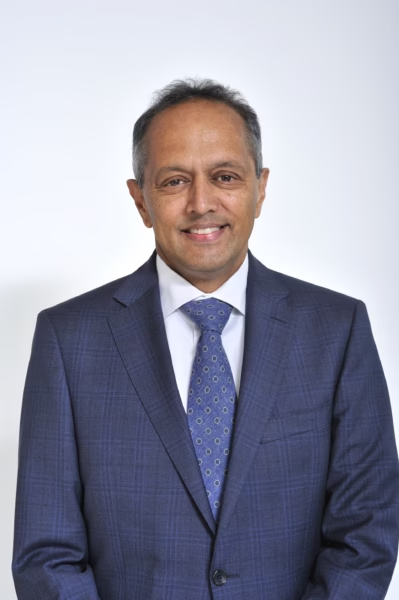

Elena Nikiphorou
Editorial Board

Elena Nikiphorou
Kings College London, London, UK
Rheumatoid Arthritis
Biography
Dr Elena Nikiphorou is a Consultant Rheumatologist at King’s College Hospital and a Reader in Rheumatology and Medical Education at King’s College London. A recipient of several awards, including the Richard Kovacs Prize (Royal Society of Medicine, 2014) and the Doris Hillier Award (British Medical Association, 2018), her research focuses on multimorbidity in rheumatoid arthritis and the development of personalised management algorithms. Her clinical and academic interests focus on inflammatory arthritis, in particular rheumatoid arthritis and spondyloarthritis, with her latest research exploring the role of social determinants of health in disease outcomes.
Vinod Ravindran
Editorial Board
Peter Taylor
Honorary Board Member

 touchIMMUNOLOGY
Register Now!
Explore the latest in medical education and stay current in your field. Create a free account to track your learning.
- Save your progress for video
- Keep track of your CME credits
- Add personalised learning notes
- Receive updates from course leaders and faculty
- Be the first to hear about new and exciting interactive learning opportunities
Log into your Touch Account
Keep track of your clinical interests and newsletter subscriptions.
Sign up with an Email
Or use a .
Register now for FREE access
Already registered? Login below.
