
Dermatologic Conditions
An Introduction to Dermatologic Conditions
Autoimmunity and deregulation of the immune system contribute to many skin diseases including systemic sclerosis, dermatomyositis, psoriasis, vitiligo, alopecia areata and lichen sclerosus; as well as inflammatory diseases such as hidradenitis suppurativa, allergic contact dermatitis and atopic eczema; and also autoimmune blistering diseases, including pemphigus vulgaris, bullous pemphigoid, epidermolysis bullosa acquisita and dermatitis herpetiformis. Established treatments include systemic corticosteroids and immunosuppressive therapies, while new therapies in development include biologic therapies targeting cytokines such as tumour necrosis factor alpha (TNF-alpha) and interleukins IL-23 and IL-17; enzymes such as Janus kinase-1 (JAK-1); and the regulatory proteinretinoic acid receptor-related-orphan-receptor-gamma t (RORγt).
Browse video highlights and short articles from the conference hub, providing insights into the latest updates from major conferences and peer-reviewed articles from the journal portfolio. This is complemented by a range of educational activities from our expert faculty, with patient outcomes at the forefront.
Our supporting partners do not constitute an endorsement of the content on this page.



Your clinical career is shaped not only by what you know, but by who helps you navigate what comes next. Join us for the final episode in our mini-series exploring non-clinical skills that can help you thrive in your clinical career. Today we explore how to develop the right team around you to support your work, and what building that bench can mean for your career, and the life you build alongside it.

We often focus on clinical excellence, but spend less time developing broader skills that could help us better lead with purpose and build more fulfilling, impactful careers. In this episode, part of a mini-series in partnership with LEADderm, Dr Jennifer Soung and Denise Mann explore how clinicians can engage with the media to educate, empower and extend their impact beyond the clinic.

Dermatologists now have a new tool to transform the treatment landscape for patients living with chronic spontaneous urticaria (CSU): the first and only oral Bruton’s tyrosine kinase inhibitor (BTKi) approved by the FDA for this condition. This oral therapy is indicated for adults with CSU who remain symptomatic despite treatment with H1 antihistamines. Taken twice daily, it requires no injections or routine laboratory monitoring, offering a convenient and targeted option for patients whose symptoms persist on standard care.

July delivered a broad range of important updates in immunology, spanning regulatory approvals, new therapeutic formulations, and key clinical trial results across autoimmune, inflammatory, and rare diseases. This monthly roundup highlights the most significant developments, including first-in-class oral therapies, expanded paediatric indications, and both positive and negative late-phase trial outcomes.

Physician burnout is at a critical point. In this episode, Nicky speaks with Dr Alfred Atanda about why so many physicians are burning out and what can be done to change the trend. From personal experience to system-wide solutions, Dr Atanda shares valuable insights on improving physician well-being and building a more effective healthcare culture.

What if your medical degree could launch more than a clinical career? In this candid and compelling read, Dr Jon Edelson shares his lessons for early-career doctors ready to think beyond the bedside and explore the business of medicine.

In this episode, we explore the future of continuing medical education (CME) with the team behind touchIME. Hannah Fisher and Matthew Goodwin share insights into global and US trends, the importance of patient inclusivity and how educational outcomes are evolving to better measure the direct impact of learning on clinical practice and patient care.
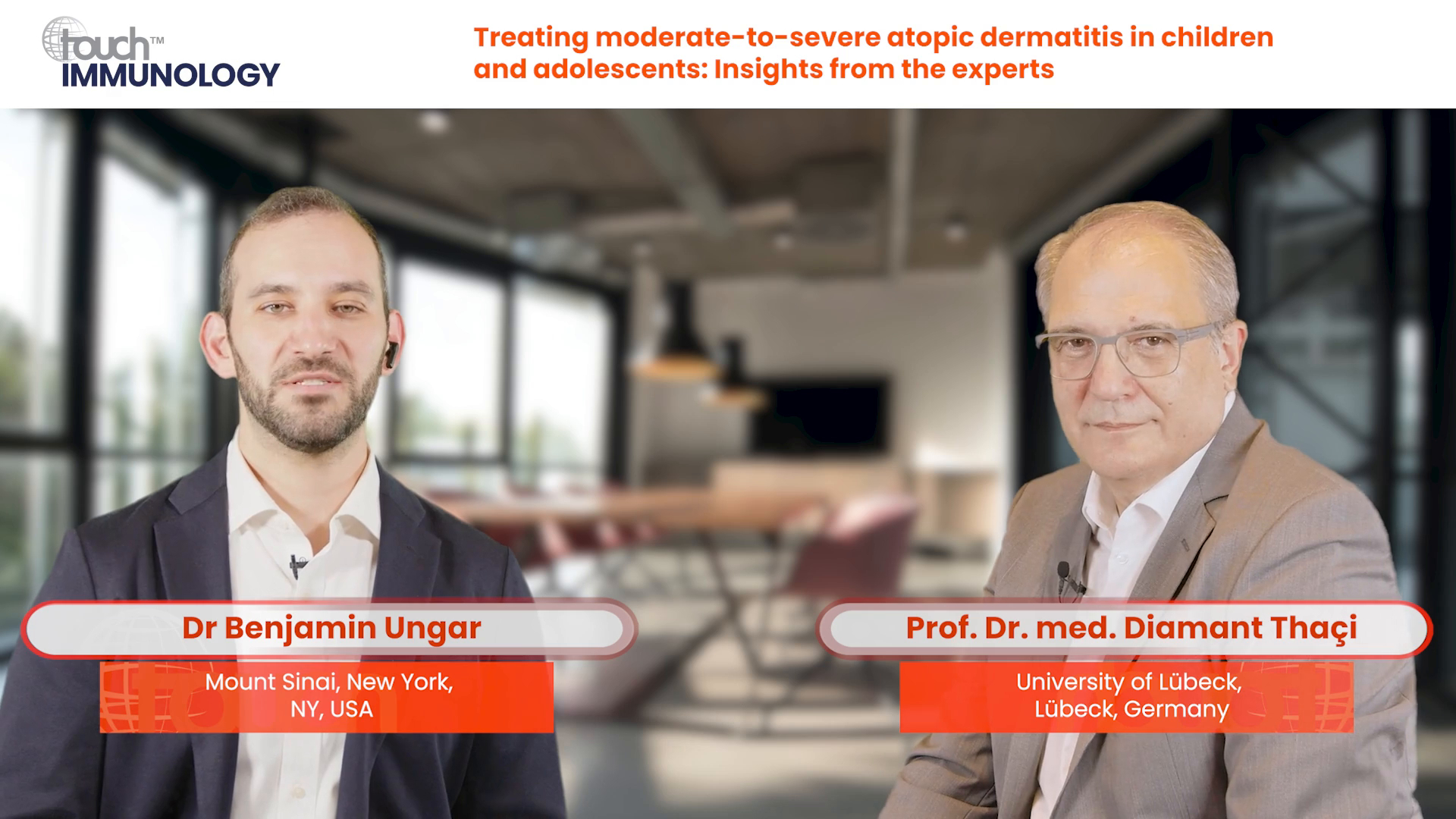
Treating moderate-to-severe atopic dermatitis in children and adolescents: Insights from the experts
Watch expert dermatologists discuss the management of moderate-to-severe AD in children and adolescents.






Select a discussion in our hub to watch our multidisciplinary experts, including a patient advocate, share important perspectives on the need to establish patient-centric treatment and care pathways for the management of prurigo nodularis.




Watch three experts discuss the symptom burden faced by patients with prurigo nodularis, and how clinicians can optimize diagnosis and treatment of the disease. **Now including 2023 UPDATE (scroll to chapter 5)**

Effisayil 1 (NCT03782792) was a randomised, double-blind, placebo-controlled phase 2 study that investigated the efficacy and safety of spesolimab in generalized pustular psoriasis (GPP). touchIMMUNOLOGY were delighted to speak with Dr. Claudia De La Cruz (Clínica Dermacross, Santiago, Chile) to discuss ...

Pemphigus is a rare autoimmune blistering disease, which results in painful blisters on the skin or mucous membranes, severely impacting patient quality of life. It was a pleasure to talk with Prof. Dedee F. Murrell (St George Hospital Campus, Kogarah, ...
touchIMMUNOLOGY coverage of data presented at AAD 2023: The treatment paradigm for pemphigus remains with many unmet needs, the current standard of care remains to be systemic corticosteroids, which cause many phycological and metabolic side effects, in the past few years ...

Dupilumab is a monoclonal antibody approved for use in patients with atopic dermatitis that is not well controlled with topical treatments, or who are unable to use topical treatments. It was a pleasure to talk with Prof Amy Paller (Northwestern ...
Atopic dermatitis is a chronic skin disorder causing inflammation, redness and irritation of the skin, and usually begins in childhood. touchIMMUNOLOGY caught up with Prof Amy Paller (Northwestern University Feinberg School of Medicine; Lurie Children's Hospital of Chicago, Chicago, IL, ...

TRuE-V1 (NCT04052425) and TRuE-V2 (NCT04057573) were randomized, double-blind, vehicle-controlled phase 3 studies that investigated ruxolinitib cream for the treatment of vitiligo over 52 weeks. We were delighted to speak to Dr. Amit G. Pandya (Palo Alto Foundation Medical Group, Sunnyvale, CA, USA) ...
Log into your Touch Account
Keep track of your clinical interests and newsletter subscriptions.
Sign up with an Email
Or use a .
Register now for FREE access
Already registered? Login below.
