
Musculoskeletal Diseases

With numerous national and international meetings taking place throughout the year, choosing which conferences to attend can be difficult. While scientific programs remain a major draw, opportunities for networking, collaboration, career development and presenting research are often just as valuable. To help identify the meetings making the biggest impact across rheumatology, we asked members of the touchIMMUNOLOGY community to share the conferences they're prioritizing this year and what makes them worth attending.

Explore our highlights from WCO-IOF-ESCEO, featuring exclusive interviews with Ali Mobasheri, Elena Bischoff, Maritza Vidal, and Joyce McSwan. The 26th World Congress on Osteoporosis, Osteoarthritis and Musculoskeletal Diseases (WCO-IOF-ESCEO) was held in Prague, Czech Republic, from April 16–19, 2026. Organized by leading scientific bodies in bone and joint health, the congress brought together international experts to share cutting-edge research, clinical developments, and emerging therapies in musculoskeletal medicine. The event advanced understanding of bone metabolism and related diseases while fostering innovation in prevention, diagnosis, and treatment strategies through a dynamic and collaborative scientific programme.

Frailty is a common and significant issue among older Australians, linked to poorer health outcomes and reduced resilience, yet it frequently goes undetected in primary care due to limited routine screening, and despite encouraging results from international community-based care models, there is still a lack of strong evidence within Australian primary care settings. In this Q&A, Dr Joyce Mcswan discusses the implementation and findings of the “Frailty in Community” program, Australia’s first integrated primary care program for frail and at-risk older adults.

Osteoporosis is a common and clinically significant comorbidity in patients with autoimmune and inflammatory diseases. The disease contributes to an increased risk of fractures, chronic pain, and functional impairment, imposing a considerable burden on patients and healthcare systems alike. In this Q&A, Dr Elena Bischoff explores the prevalence and fracture risk of osteoporosis in these populations, the underlying mechanisms of bone loss, how chronic inflammation disrupts bone homeostasis, additional contributing risk factors, and current best practices for screening and management.

Hypophosphatasia (HPP) is a rare genetic disorder caused by loss-of-function variants in the ALPL gene, resulting in low alkaline phosphatase activity and defective bone and tooth mineralization. In this Q&A, we spoke with Dr Maritza Vidal about where hypophosphatasia stands today in terms of recognition, clinical burden, and key challenges in diagnosis and management. Dr Vidal also explores the current treatment landscape and emerging therapeutic approaches, while highlighting recent research developments shaping our understanding of hypophosphatasia and the key priorities for advancing care.

Sarcopenia is a progressive, age-related loss of skeletal muscle mass and function that significantly contributes to frailty, disability, and adverse health outcomes in older adults. The evolving role of biomarkers, including both imaging and biochemical approaches, is reshaping how sarcopenia can be detected, stratified, and monitored with greater precision across the care continuum. In this Q&A, Professor Ali Mobasheri explores how sarcopenia markers can enhance identification and assessment within frailty care pathways, highlights those closest to routine clinical use, examines key implementation challenges, and discusses the evidence needed to support their broader adoption in clinical practice.

S3E3_Could senolytics change the treatment landscape of age-related diseases? In this episode, Nicky speaks with Prof. Georgina Ellison-Hughes from King’s College London about the groundbreaking field of senolytics and their potential to advance the treatment of age-related ...

In this episode we explore the concept of syndemics, how biology, society and the environment interact to shape health outcomes. We are joined by Dr Elena Nikiphorou (King’s College London), who is pioneering the use of syndemic thinking in inflammatory arthritis, and Dr Lisa Hamzah (St George’s Hospital, London), whose experience in HIV research offers unique insight into how this approach can transform care. Together we discuss how applying this framework, first developed in HIV research, could improve care for people with rheumatic and musculoskeletal diseases (RMDs) and help advance global health equity.

Physician burnout is at a critical point. In this episode, Nicky speaks with Dr Alfred Atanda about why so many physicians are burning out and what can be done to change the trend. From personal experience to system-wide solutions, Dr Atanda shares valuable insights on improving physician well-being and building a more effective healthcare culture.

What if your medical degree could launch more than a clinical career? In this candid and compelling read, Dr Jon Edelson shares his lessons for early-career doctors ready to think beyond the bedside and explore the business of medicine.

In this episode, we explore the future of continuing medical education (CME) with the team behind touchIME. Hannah Fisher and Matthew Goodwin share insights into global and US trends, the importance of patient inclusivity and how educational outcomes are evolving to better measure the direct impact of learning on clinical practice and patient care.
From advances in targeted therapies to the integration of AI and steps towards precision medicine, 2024 brought many exciting developments in the field. With 2025 now unfolding, many of these are likely to continue gaining momentum and potentially redefine patient care. In ...
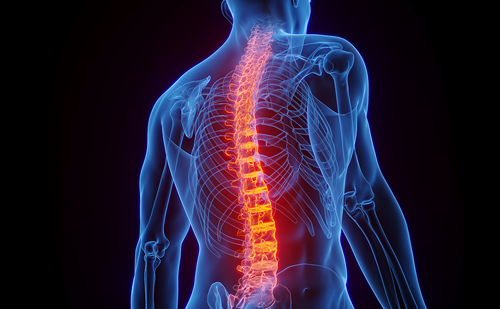
There is much excitement about the deployment of artificial intelligence (AI) in healthcare, and the musculoskeletal field is no exception. In this article, we introduce some of the latest developments relating to osteoarthritis (OA), osteoporosis, rheumatoid arthritis (RA) (as an ...
Log into your Touch Account
Keep track of your clinical interests and newsletter subscriptions.
Sign up with an Email
Or use a .
Register now for FREE access
Already registered? Login below.
