touchIMMUNOLOGY coverage of ACR 2025:
Upadacitinib is an oral JAK inhibitor approved in the UK, EU and USA for the treatment of giant cell arteritis (GCA), with approval supported by the 52-week findings of the phase 3 SELECT-GCA study. Following the positive findings, SELECT-GCA progressed for a further 52 weeks, in a re-randomized, double-blind phase, investigating the long-term efficacy and safety of upadacitinib.
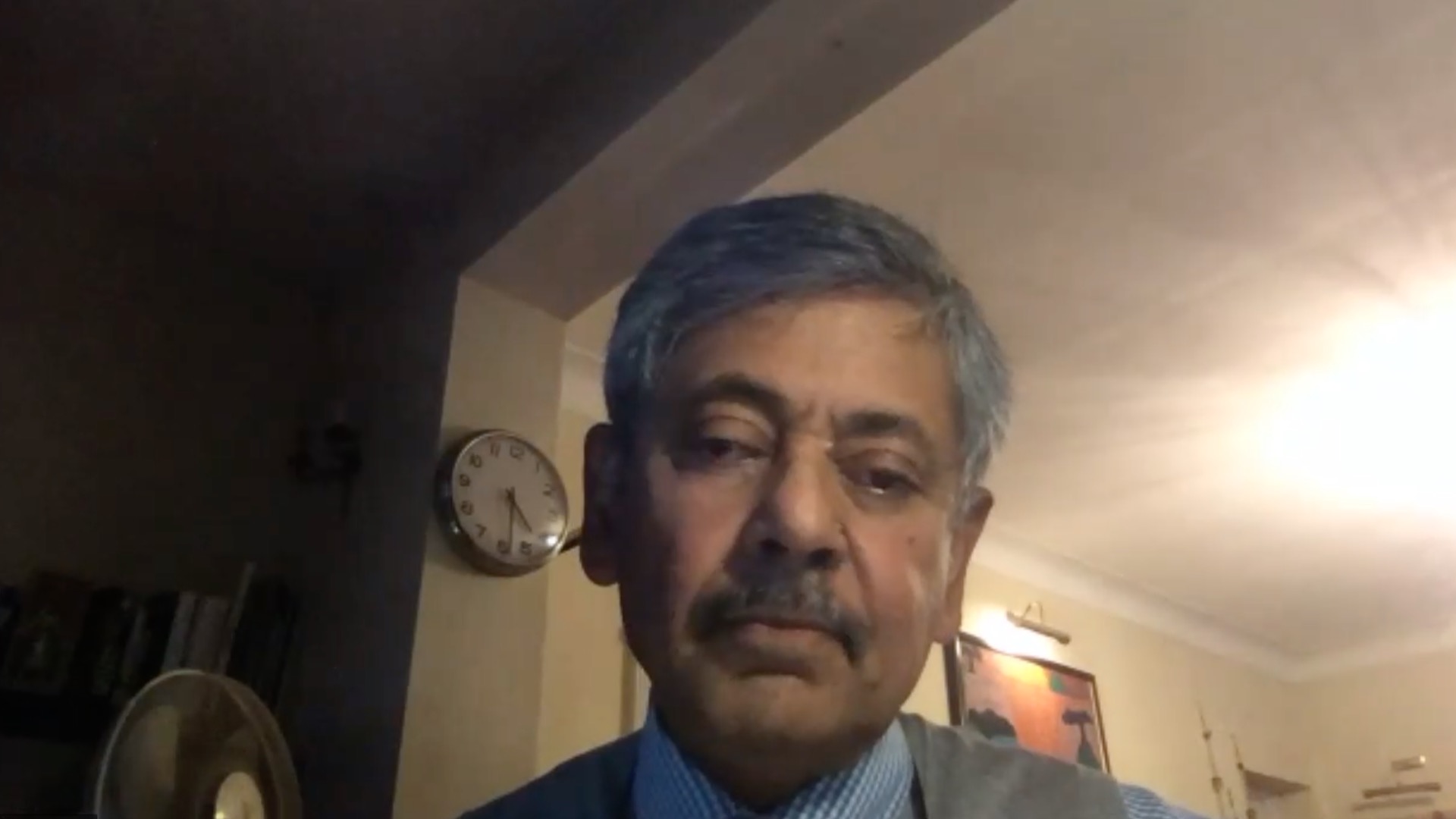
touchIMMUNOLOGY spoke with Prof. Wolfgang Schmidt (Charité University Medicine, Berlin, Germany) to discuss the aims and design of the re-randomized SELECT-GCA trial, the 2-year efficacy and safety findings, and what these will mean for clinical practice. Following approval earlier this year, Prof. Schmidt also explores where upadacitinib might fit in the treatment paradigm for GCA.
The abstract “0776: Efficacy and Safety of Upadacitinib in Giant Cell Arteritis: 2-Year Results From the Re-Randomized, Double-Blind SELECT-GCA Phase 3 Trial” was presented at the ACR Convergence 2025, October 24–29, Chicago, Illinois.
- Could you give us a brief overview of period 1 of the SELECT-GCA trial, and what the findings were at week 52?
- Could you describe the aims and design of the re-randomized SELECT-GCA Phase 3 trial?
- What were the 2-year efficacy and safety findings?
- What is the clinical significance of these results?
- Following approval earlier this year, where do you expect upadacitinib to fit in the treatment paradigm for GCA?
[Transcript]

My name is Wolfgang Schmidt. I’m a rheumatologist from Berlin, Germany. I’m working currently at Waldfriede Hospital. I’m a Professor of Rheumatology at the Charity University Medicine. I’m a clinical rheumatologist, and I’m interested particularly in giant cell arthritis and polymyalgia rheumatica.
Q. Could you give us a brief overview of period 1 of the SELECT-GCA trial, and what the findings were at week 52?
Yes, SELECT GCA is a phase 3 randomized controlled study evaluating upadacitinib versus placebo in patients with newly diagnosed or relapsing giant cell arteritis. Patients were randomized 2:1:1 to 3 arms, 15mg upadacitinib, which is the usual dose approved for most rheumatic diseases, 7.5mg, which is half of the usual dose, and placebo. The upadacitinib patients received prednisone with a tapering scheme of 26 weeks, and the placebo group had a slower prednisone reduction scheme of 52 weeks.
Now the results were that patients with upadacitinib 15mg had less relapses, less flares, and continuous sustained remission over those 52 weeks. Remission over 52 weeks was 46% in the upadacitinib group and was 29% in the placebo group. For those receiving 7.5mg, the remission rate was a little bit slower and was not significant.
Now this doesn’t seem to be a big difference, but patients of course had a different prednisone reduction scheme. So the prednisone cumulative dose was 2.9g over the whole year for the placebo group and only 1.6g per dose over this time for the upadacitinib groups. So there was a steroid sparing effect, and there was sustained remission. This data convinced the FDA and EMA, and it has approval for the treatment of giant cell arthritis.
Q. Could you describe the aims and design of the re-randomized SELECT-GCA Phase 3 trial?
It’s unique that we have a trial, a randomized, controlled trial where there is a re-randomization. So patients who were in remission at the end of those 52 weeks were re-randomized. It is particularly interesting to look at the approved dose of 50mg/day, and they were re-randomized 2:1 to either continue upadacitinib or switch to placebo.
Q. What were the 2-year efficacy and safety findings?
The outcome was very interesting because we only had a 17% difference in the first year, but the difference appeared to be much larger [in the second year]; of course, the groups are now much more comparable.
In fact over 104 weeks, out of 68 patients who remained in remission, there were only 5 relapses. That means only 7.4% of the patients relapsed, whereas the relapse rate in the placebo arm was 59%. The patients who stopped upadacitinib and switched to placebo relapsed very early – about 20% in the first 4 weeks and another 20% within the first 8 weeks. What’s quite interesting, is that this is much faster than with tocilizumab; if you stop that after 1 year with a weekly dose of 162mg subcutaneously, then patients relapse much later. So with JAK inhibitors, we also know that things change much quicker. This was, of course, significant.
There was also a comparison between the 7.5mg group and placebo, so they continued on 7.5mg or switched to placebo. There was about 20% delta, but this was not significant. There were also patients who remained on placebo, so those patients who made it to be on placebo for the last 24 weeks and didn’t have any prednisone at week 52, about 20% flared, which is rather low, but this is just a selection of patients who were in remission.
So the interesting data is at least 59% that flared on placebo versus 7.4% on upadacitinib in the second year. Interestingly, now after week 104, patients stopped all the medications, and there was a follow-up. Then the flare rate for the patients who remained on upadacitinib went from 7.4% to 15.5%. After 2 years, some patients flared within the first 30 days.
Q. What is the clinical significance of these results?
Patients remained in remission and we really see that this drug works. These patients also had much less prednisone over the second year, so the median was 1g and even a little bit more in the mean values. We don’t know when we diagnose and start treating giant cell arthritis, which patient will make it rather fast, within 1 year, without any relapse or if they will need more time, it is something we need to try. Usually, relapses are not severe, so patients don’t go blind with relapses. Some patients, probably more than 50%, need treatment for over 1 year and we don’t know the exact number for over 2 years, but there are lots of relapses if we stop the drug. So we have a drug which can save us steroids in the second year of treatment.
This is only the second drug which has been approved for giant cell arthritis, so far we only have 2 with tocilizumab. There were many studies trying other drugs, but practically all the other trials were unsuccessful. Meanwhile, we just have the second drug and it’s fantastic, because there is definitely a need for glucocorticoid sparing. If you look at most of the other rheumatic diseases, we usually use glucocorticoids for a short time or we have some situations, maybe psoriatic arthritis, where we usually try to treat without any glucocorticoids. Here, many patients are still treated with glucocorticoids over many years, and it is very important to have an improvement for these patients.
Q. Following approval earlier this year, where do you expect upadacitinib to fit in the treatment paradigm for GCA?
So far we have recommendations, American recommendations and European recommendations, which do not yet include upadacitinib because the data are new. We have recommendations for tocilizumab; the US American recommendations are a little bit stronger, and they say consider tocilizumab for every patient with giant cell arthritis. I think more patients are treated with tocilizumab in the United States compared to Europe; Europeans are a little bit more reluctant. It’s fairly free for us rheumatologists to decide if there is an increased risk for side effects with glucocorticoids, whereas it is recommended to treat with a glucocorticoid-sparing drug. Now the question is should we use one or the other? And I can imagine that new guidance will also include upadacitinib now it is approved.
We have study data and now we even have additional study data. There is one drawback of tocilizumab; it’s that the C-reactive protein (CRP) and erythrocyte sedimentation rate (ESR) are practically zero, and it’s very low independent of disease activity. It’s a very well working drug, but we cannot use it as a follow-up tool, and sometimes it’s difficult to really understand the patient’s symptoms. Imagine there is a patient with dementia or patients who really cannot explain their symptoms very well, and then it’s practically impossible to decide if there is a flare or not, whereas upadacitinib also decreases the inflammatory markers. But what we know from other rheumatic diseases, is that we can really use this for follow-up. Another advantage is that it’s orally available.
There is a a safety concern for major cardiac events or for melanoma with JAK inhibitors as a group effect; however, there is new information from the safety study ORAL Surveillance, and we don’t know if this concerns upadacitinib or tofacitinib.
In this study, we don’t see any major cardiac events, although the population was 70 years old, over 2 years there was not a single one, and there was also not an increase of thrombosis. We have a little bit more herpes zoster, and this is one of the known adverse events for JAK inhibitors. On the other hand, as we had less glucocorticoids in the upadacitinib arm, there were less severe infections. There was another abstract at the ACR meeting that shows this is particularly relevant in the first year when patients stopped the glucocorticoids in the upadacitinib arm and continued taking glucocorticoids in the placebo arm, there was a difference of infections and severe infections in favour of upadacitinib.
I expect that more patients will receive drugs which spare glucocorticoids for giant cell arteritis. I expect that this will also come into European and American recommendations when they are updated, we will see. I think we are going to have two options, and that’s very good.
More content in vasculitis.
Cite: Upadacitinib in giant cell arteritis: 2-year findings from the re-randomized SELECT-GCA trial. touchIMMUNOLOGY. 13 November 2025.
Editor: Victoria Smith, Senior Content Editor.
This content has been developed independently by Touch Medical Media for touchIMMUNOLOGY. It is not affiliated with the American College of Rheumatology (ACR). Views expressed are the speaker’s own and do not necessarily reflect the views of Touch Medical Media.
Disclosures: Wolfgang Schmidt discloses receiving grant/research support from: Abbvie and Novartis; serving on advisory boards for: Abbvie, Amgen, Boehringer Ingelheim, Fresenius Kabi, Novartis, and Sanofi; participating in speaker’s bureaus with: Abbvie, Alfasigma, Amgen, Chugai, GlaxoSmithKline, Lilly, Medac, Novartis, Pfizer, Sanofi, and UCB.
Related content
- Advancing Vasculitis Care and Medical Education: An Interview with Future Leader, Dr Brian Jaros
- European Commission approval of upadacitinib 15 mg for the treatment of giant cell arteritis in adult patients
- Molecular Phenotyping of Giant Cell Arteritis: Lisa Christ, EULAR 2023
SIGN UP to TouchIMMUNOLOGY!
Join our global community today for access to thousands of peer-reviewed articles, expert insights, and learn-on-the-go education across 150+ specialties, plus concise email updates and newsletters so you never miss out.