Positive phase 3 REPLENISH findings support regulatory applications for seckunimab in PMR, potentially providing an alternate to glucocorticoids.

Secukinumab is an investigational, fully human monoclonal antibody that selectively inhibits IL-17A. Findings from REPLENISH, a phase 3 study investigating the efficacy and safety of secukinumab in polymyalgia rheumatica (PMR), were recently presented at EULAR 2026.
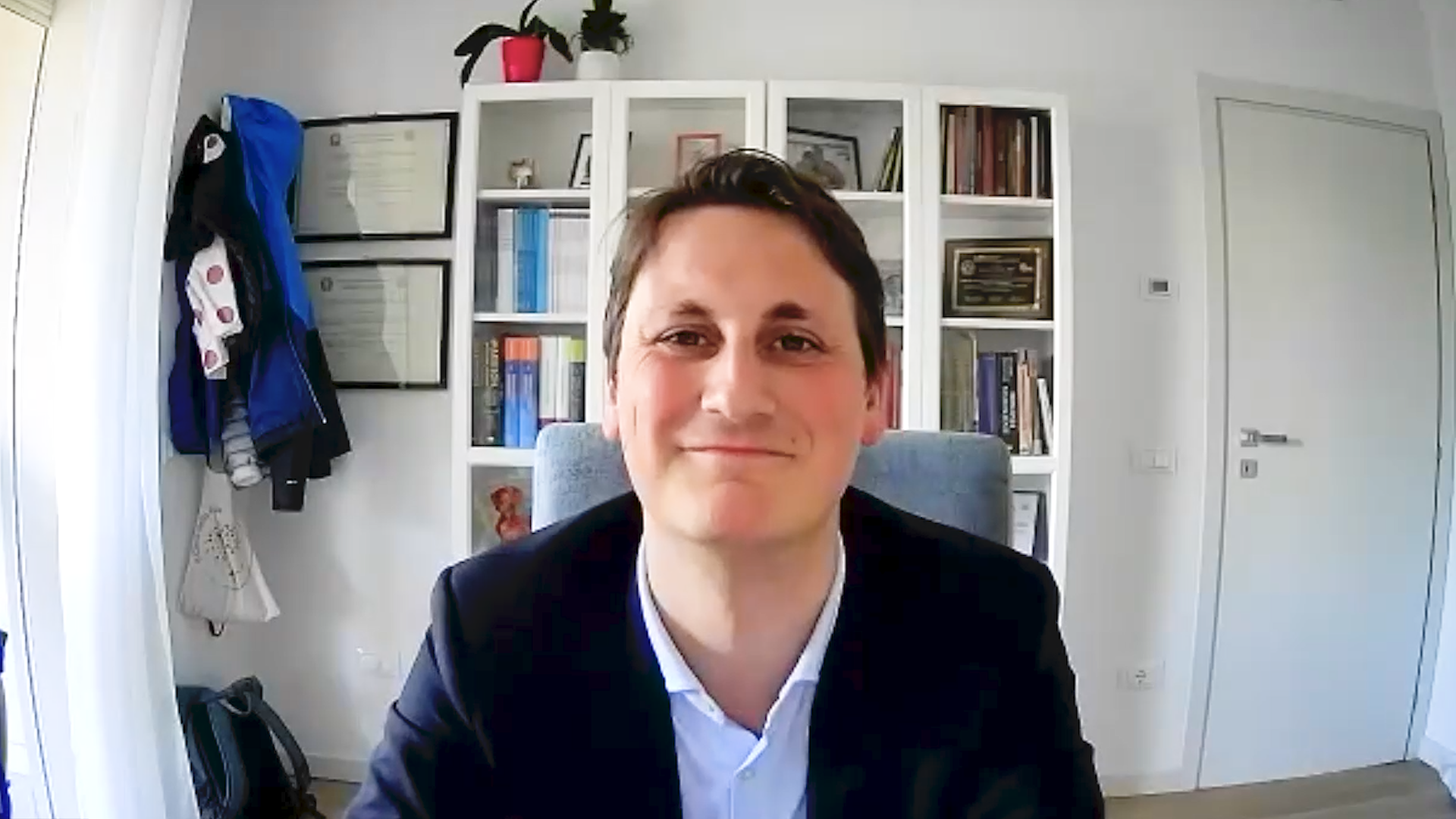
We spoke with Dr Christian Dejaco (Hospital of Brunico, Brunico, Italy) about the challenges associated with the treatment of PMR, the mechanism of action of secukinumab, and the rationale for its investigation in this indication. Dr Dejaco also talked with us about the aims, design and key efficacy and safety findings from REPLENISH, and what they could mean for clinical practice.
Abstract: Secukinumab in polymyalgia rheumatica: Results of the phase 3 REPLENISH trial. EULAR 2026, June 3– 6, London, UK. touchIMMUNOLOGY coverage of EULAR 2026 My name is Christian Dejaco, I’m a rheumatologist based in Italy, and I’m part of the team authoring the trial on secukinumab in polymyalgia rheumatica. The biggest challenge in treating PMR is that glucocorticoids are still a mainstay of treatment, and many patients relapse in course and need long-term glucocorticoid treatment. The problem with long-term glucocorticoid treatment is that many patients, more than 50%, have adverse events. Therefore, we need new treatments to prevent glucocorticoid use in the long term. Secukinumab is a monoclonal antibody against interleukin-17A, and it’s already well established for many diseases in rheumatology. In patients with PMR, interleukin-17 is elevated in serum, and it has also been found in tissue. Then in a phase 2 trial in GCA, treatment with secukinumab resulted in patients having fewer PMR symptoms, and that was the rationale to conduct the phase 3 trial. The study was a randomized, controlled, phase 3 trial. There were three treatment arms; one receiving secukinumab 300 mg, one receiving secukinumab 150 mg, and one placebo arm. All treatment arms received a 24-week taper of glucocorticoids. The study enrolled patients with a diagnosis of PMR and at least one recent relapse. The primary objective was the achievement of sustained remission at Week 52, which was defined as achieving remission at Week 12 and maintaining remission up to Week 52. There were several secondary endpoints, such as the achievement of complete sustained remission, which is similar to sustained remission, but includes the maintenance of a normalized C-reactive protein (CRP) and erythrocyte sedimentation rate (ESR). Other endpoints were the cumulative glucocorticoid dose, the impact of the treatment on glucocorticoid toxicity, or time until use of rescue or escape treatment. The trial actually met the primary and secondary endpoints. Concerning the primary endpoint, there was a significantly higher rate of achieving complete remission in both secukinumab groups compared to placebo. There was a delta between placebo and both secukinumab groups of around 20%. In terms of the secondary endpoint, both secukinumab groups also achieved a higher rate of complete sustained remission. The overall response rate for that outcome was lower among all groups, but the delta of 20% between placebo and both secukinumab groups was maintained. There were also significant reductions in cumulative glucocorticoid dose, and that translated into less toxicity, as measured by the glucocorticoid toxicity index, where both secukinumab groups had lower scores as compared to the placebo group. We expect approval of secukinumab in the next couple of months. Subsequently it will be another option to save glucocorticoids in our PMR patients who are refractory or have had one or more relapses. Already registered? Login below.
Could you describe the challenges associated with the treatment of PMR?
What is the mechanism of action of secukinumab and rationale for its investigation in PMR?
What were the aims, design, and endpoints of the phase 3 study?
How well were the primary and secondary endpoints met?
What is the potential clinical significance of these findings?
This content has been developed independently by Touch Medical Media for touchIMMUNOLOGY in collaboration with Dr Christian Dejaco. Views expressed are the speaker’s own and do not necessarily reflect the views of Touch Medical Media.
Disclosures: Christian Dejaco discloses consulting for AbbVie, Boehringer, Novartis, Sanofi, and ZuraBio; and participating in speaker’s bureaus with AbbVie, Fresenius, Novartis, Sanofi, and UCB.
Cite: Secukinumab demonstrates efficacy and safety in polymyalgia rheumatica: Results from the phase 3 REPLENISH trial. touchIMMUNOLOGY. June 08 2026.
Editor: Victoria Smith, Senior Content Editor.