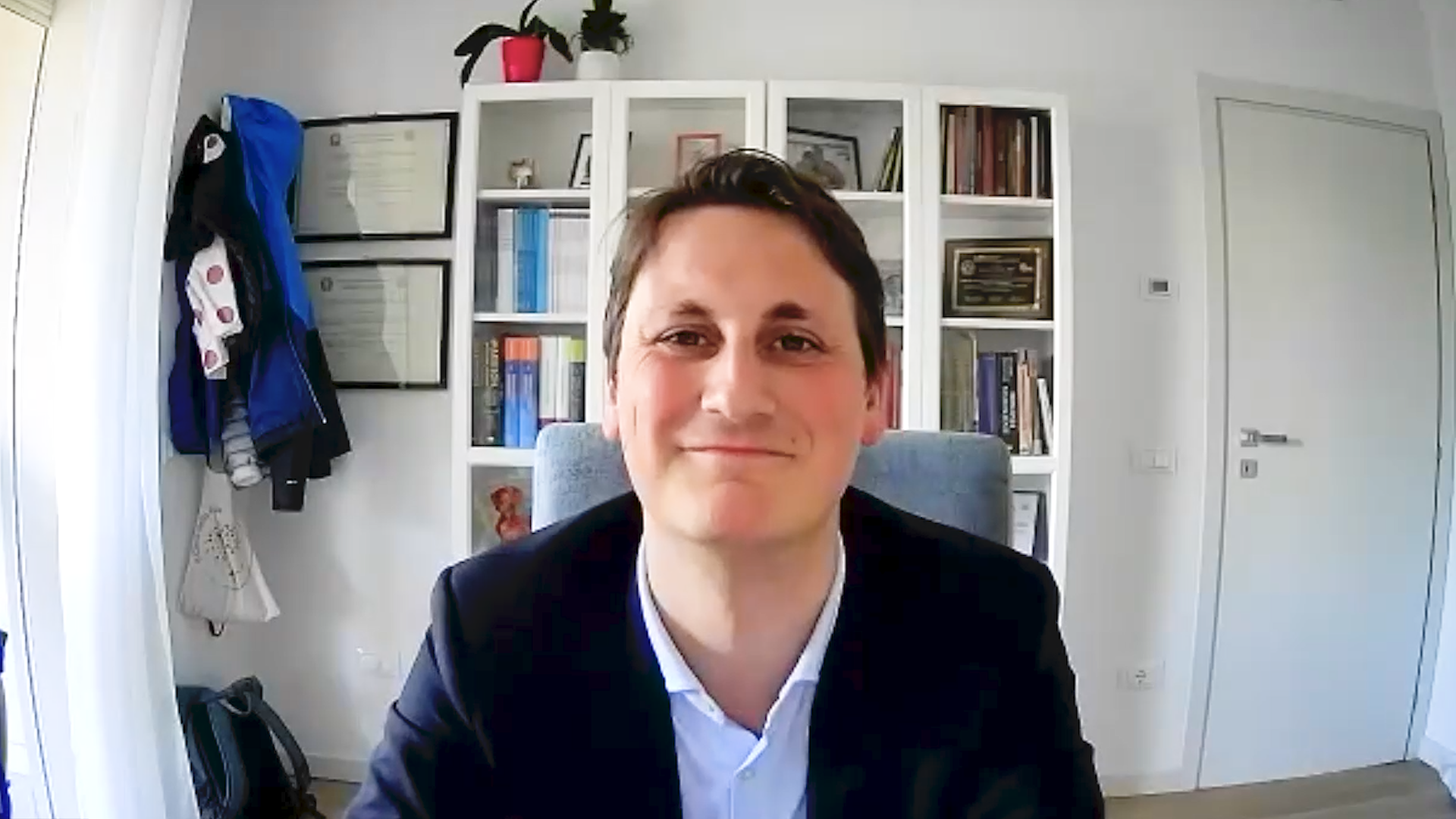
 As the year draws to a close, we’re reflecting on the scientific and clinical progress that shaped 2025. It has been a truly groundbreaking year, marked by important therapeutic approvals, major guideline updates, and advances in personalized medicine, AI, and diagnostics that continue to refine the way immune disorders are understood and managed. Across specialties these developments have driven meaningful improvements in patient care and opened the door to new research possibilities.
In this year-end review, we are pleased to share personal highlights from members of the touchIMMUNOLOGY Expert Faculty, whose perspectives offer a window into the innovations that have most influenced clinical practice and research over the past 12 months. Their reflections capture not only the momentum of 2025, but also the promise of what lies ahead as the field continues to evolve.
Professor Peter Taylor
(University of Oxford, Oxford, UK)

“There have been many impactful advances in rheumatology over the past year. These include new research implicating the role of metabolic health as well as inflammation in arthritic conditions. A publication in the New England Journal of Medicine in late 2024 reported that in knee osteoarthritis, once-weekly injectable semaglutide, a GLP-1 receptor agonist, resulted not only in significantly greater reductions in body weight than placebo but also greater reduction in knee pain. Evidence was also presented at the American College of Rheumatology (ACR) Convergence 2025 meeting to suggest that GLP-1 receptor agonists may reduce disease flares in rheumatoid arthritis patients.”
Dr David A. McLain
(Congress of Clinical Rheumatology, Birmingham, AL, USA)

“In 2025, we saw the repurposing of CAR T cell therapy, originally developed for cancer therapy, for use in rheumatology. Professor Georg Schett in Erlangen, Germany used CAR T cell therapy for lupus with apparent drug-free remission being reported. This in a patient who had failed available therapies with continued active disease. Clinical trials are now being conducted in many autoimmune rheumatic diseases, including lupus, Sjogren’s disease, dermatomyositis, antiphospholipid antibody syndrome, ANCA vasculitis, systemic sclerosis, Behçet’s disease, IgG-4 related disease, microscopic polyangiitis, juvenile dermatomyositis, rheumatoid arthritis, idiopathic inflammatory myopathies, and lupus nephritis. There has been an explosion in research based on this therapy, and the rheumatology world awaits the short- and long-term results.”
Dr Alina Dima
(Carol Davila University, Colentina Clinical Hospital, Bucharest, Romania)

“In 2025, new data enabled novel therapeutics approaches, including anti-CD19 therapy for IgG4-related disease, CAR T-cell as an immune “reset” strategy in refractory systemic lupus erythematosus, or BTK inhibitors in Sjogren’s syndrome.
For JAK inhibitors, the latest advances have refined use with expanding indications like dermatologic diseases, systemic vasculitis or lung fibrosis (including JAK/ROCK dual inhibition). Most importantly, the conceptual focus for these therapeutics has shifted towards improved selectivity and smarter, risk-adapted dosing approaches (step-down and on-off strategies).
Supported by GLP-1 receptor expression in joint tissues, successful metabolic-specific targeted drugs are now being explored in osteoarthritis, a condition that still lacks disease-modifying therapeutics.
Recent periods have confirmed a true incidence increase of autoimmune conditions. A central driver may be the mismatch between immune system “slower” adaptation to present-day industrialized environment, with cumulative exposure to air pollution, ultra-processed food, microplastics, or endocrine disruption. Further, conceptual advances over infections as trigger for autoimmunity support a model of long-lasting post-viral immune imbalance rather than a single-point trigger. Insights gained from COVID-19 provided a clinical model for immune-mediated chronic fatigue. Within this framework, a shift of the clinical phenotype is observed: autoimmune diseases appear more systemic and overlapping, not necessarily driven by overt inflammatory flares, but rather by low-grade immune dysregulation.
The future of medicine across all areas is certainly AI-driven. In autoimmune prevention, the focus should be on generating large-scale datasets, big data that only AI can integrate across genetic susceptibility, the complex exposome, and overt clinical autoimmunity.“
Dr Vinod Ravindran
(Centre for Rheumatology, Calicut, Kerala, India)

“In 2025, rheumatology as a medical discipline has made substantial progress in several domains. With rheumatology research and care increasingly focused on patient-related outcomes, Artificial Intelligence (AI) ticks many boxes and may be considered one of the most impactful advancements in rheumatology in 2025. It offers precision diagnostics (by using algorithms that can analyse imaging, lab results, and genetic data to detect subtle disease patterns earlier than clinicians), predictive modelling (by using machine learning tools that can forecast disease progression and flare risks and guide in proactive interventions) and aid in optimization of the treatment (by potentially matching patients with the most effective therapy based on their biomarker profile). Of course, the operational integration of AI with the day-to-day practice remains a work in progress, with challenges of data privacy and uniform access not only to the AI technologies but also to other aspects of rheumatology care. Nevertheless, as an emerging health care tool, AI has all the potential to transform rheumatology from reactive to proactive care.”
Dr Elena Myasoedova
(Mayo Clinic College of Medicine and Science, Rochester, MN, USA)

“Key advances in rheumatology in 2025 reflect both immediate practice-changing safety considerations and longer-term therapeutic transformation. Continued regulatory scrutiny of JAK inhibitors has reinforced the importance of careful cardiovascular and thromboembolic risk stratification, particularly in older patients and those with multiple comorbidities. This can directly influence treatment selection, consent discussions, and post-marketing surveillance in routine care.
Targeted therapies continued to expand, with accumulating long-term efficacy and structural protection data for IL-23 inhibitors in psoriatic disease and growing momentum for oral TYK2 inhibitors. These agents are reshaping treatment algorithms by offering additional options for patients with inadequate responses to TNF or IL-17 inhibitors and by strengthening the position of oral targeted therapies in selected patients.
Earlier detection of axial spondyloarthritis gained further traction in 2025, through improved screening tools and referral strategies aimed at reducing diagnostic delay. Earlier diagnosis enables more timely initiation of effective therapy and has important implications for long-term functional outcomes and disability prevention.
Metabolic health emerged as a key disease modifier, with increasing recognition that obesity, insulin resistance, and cardiometabolic risk influence inflammatory burden and treatment response. Integration of weight management strategies and metabolic therapies with possible adjunctive use of GLP-1 agents for select patients into rheumatology care is increasingly utilized.
Finally, early clinical successes of cellular therapies, including CAR-T approaches, and advances in gene-based medicine in autoimmune disease signal a potential future shift toward immune “reset” strategies for refractory disease. While not yet routine, these developments highlight a rapidly evolving therapeutic horizon with transformative long-term potential.”
Dr Richard Furie
(Northwell Health and Zucker School of Medicine, Hempstead, NY, USA)

“B cell depletion with rituximab represented a sound novel treatment strategy for systemic lupus (SLE) and lupus nephritis (LN) over 20 years ago. However, the two clinical trials, EXPLORER and LUNAR, in SLE and LN failed to achieve their endpoints. Pursuit of B cell depletion in SLE continued with ocrelizumab only to have the BELONG trial encounter a sufficient number of adverse events to prematurely close the LN program. With mounting evidence that greater clinical responses occurred in those with greater degrees of B cell depletion, focus turned to novel approaches to enhance B cell depletion.
Several investigators embarked on the sequential administration of rituximab and belimumab. Yet another approach was with a novel monoclonal antibody, obinutuzumab, capable of more potent B cell depletion. The phase II study in LN (NOBILITY) was successful, and thus served as the foundation for the phase III study in LN, known as REGENCY. Perseverance paid off as the REGENCY study’s positive results appeared in the New England Journal of Medicine in early 2025. The drug was subsequently approved for LN by the FDA in October 2025. Furthermore, a press release in the fall of 2025 announced the success of the ALLEGORY study, a phase III study of obinutuzumab in SLE. Despite very tenuous beginnings, B cell depletion with an anti-CD20 monoclonal antibody was ultimately shown in 2025 to be of clinical benefit in randomized clinical trials in LN and SLE.”
 touchREVIEWS in RMD call for submissions!
👉 What We Offer:
- Peer-reviewed, free-to-access publications;
- Enhanced digital features and plain language summaries;
- No fees associated with publication; and
- Multiple article types, including original research, reviews, editorials, commentaries and practice pearls.
For more details and to submit your research, visit our journal page.
More content in rheumatic diseases.
Cite: A year in review: Expert voices on the developments that defined 2025. touchIMMUNOLOGY. 15 December 2025.
Editor: Victoria Smith, Senior Content Editor.
This content has been developed independently by Touch Medical Media for touchIMMUNOLOGY. Views expressed are the speaker’s own and do not necessarily reflect the views of Touch Medical Media.
SIGN UP to TouchIMMUNOLOGY!
Join our global community today for access to thousands of peer-reviewed articles, expert insights, and learn-on-the-go education across 150+ specialties, plus concise email updates and newsletters so you never miss out.