 Early endoscopic recognition of premalignant upper gastrointestinal (UGI) conditions is crucial for cancer prevention, yet the prevalence and detection rates of these conditions remain poorly defined, highlighting the need for clearer diagnostic standards in UGI endoscopy. PROSPERO was a prospective study based in the UK, which evaluated over 1,000 endoscopy patients to determine the prevalence of pre-malignant UGI conditions and associated risk factors.
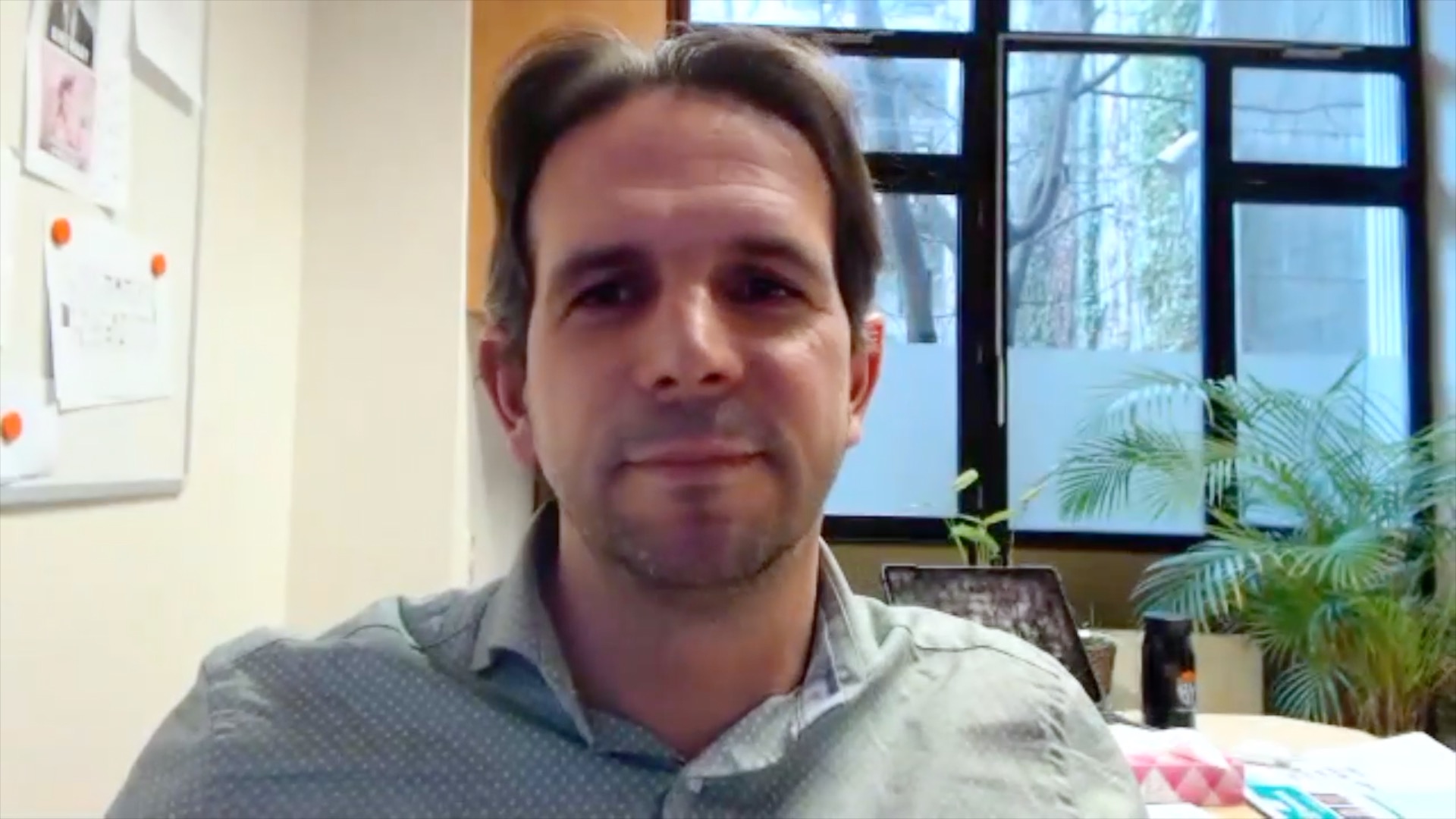
In this interview, touchIMMUNOLOGY caught up with Future Leader, Dr Andreas Hadjinicolaou (University of Cambridge, Cambridge, UK) to discuss the aims, methodology and inclusion criteria of the PROSPERO study. We also spoke about the outcomes of the study and how these insights might be used to improve early detection and intervention in UGI cancers.
The abstract “Prevalence Of Premalignant Upper GI Conditions And Associated Risk Factors In The Upper GI Endoscopy Population: Data From The Prospero Study” won the best oral presentation award for the Gastric Cancer Session at UEG Week, 4–7 October, Berlin, Germany.
touchIMMUNOLOGY coverage of UEG Week 2025:
My name is Andreas Hadjinicolaou. I’m one of the academic gastroenterologists from the University of Cambridge.
How could early endoscopic recognition of UGI cancers improve patient outcomes?
Specifically for upper GI cancers, like oesophageal and stomach cancer, we know very well that picking up the disease at an advanced stage has huge disadvantages for patients; 5-year survival for gastric cancer is usually 15 to 20% at most. Whereas, if you pick it up early at stage 1 or 2, or even better, at a pre-malignant stage, you have curative options, including endoscopic options, which can take the 5-year survival up to 90%.
There is evidence from high-risk populations, such as in Korea and Japan, where there are national screening programs for gastric cancer using endoscopy. Those programs have increased the 5-year survival to up to 70%. Of course, here we are now talking about low-to-moderate incidence countries, such as the UK and Europe, and I think in those cases, we need to find other ways to pick up gastric cancer earlier to improve survival and patient outcomes.
What were the aims and methodology of the PROSPERO study?
PROSPERO is a prospective study aiming to recruit 1,000 patients coming through for an UGI endoscopy referred via any pathway, so urgent or routine, for any indication, with the aim of identifying the true prevalence of pre-malignant UGI conditions in a symptomatic population referred for upper GI endoscopy. The ultimate objective is to use that prevalence as a quality indicator to monitor performance in upper GI endoscopy.
UGI endoscopy is lacking behind in that aspect, especially when compared to lower GI endoscopy, where we have the adenoma detection rate, a well-validated, well-established quality indicator. We don’t have diagnostic quality indicators in UGI endoscopy. This is what we need to improve our detection and hence why this was the main goal of the study.
We have got some secondary aims, where we want to try and understand if there are any endoscopic factors or pre-endoscopic factors that can impact on detection of pre-malignant (and malignant) lesions. For example, we would like to evaluate whether any lifestyle or medical history factors might refine the endoscopist’s pre-test probability of finding some pathology, and also whether there are endoscopic factors that might facilitate detection of lesions that would otherwise be missed.
We have recruited more than 1,000 patients. We have excluded patients that have known pre-malignant conditions and are already under surveillance. We’ve excluded patients that have had an endoscopy in the last 3 years to reduce bias and we’ve excluded patients that have had previous UGI surgery for malignant disease.
As part of the protocol, we mandate specific biopsies to be taken, regardless of whether there is pathology. We obligate the Sydney biopsy protocol in the stomach – 2 biopsies from the antrum/incisura, 2 biopsies from the proximal stomach, and then 4 biopsies from the oesophagus; top and bottom x2 each, looking for things like squamous dysplasia and eosinophilic esophagitis. Any targeted biopsies are at the discretion of the endoscopists according to the findings they might have on endoscopy.
Could you describe the baseline characteristics of the patients recruited into this study?
Looking at the data that we have from around 1,000 patients now, approximately 60% being females, with a mean age of around 58 years, and more than half of our participants being on PPIs. We have a good mix of urgent versus routine referrals, academic/tertiary institutes versus district/general hospitals, and a good geographical spread across the UK. All of these are representative of daily routine practice in the UK.
We also have data on other factors, including smoking, alcohol, family history of cancer, ethnicity and race, giving us the opportunity to look at these as potential risk factors or modifiable factors for pathology. We know endoscopy-wise about two-thirds are done by gastroenterologists and about one-third by non-gastroenterologists, and we’ve got data on the indication of the endoscopy as well; the top ones being heartburn, dyspepsia, abdominal pain, and bloating.
What conclusions can be drawn from the data collected from this population?
The first conclusion is that the overall pre-malignant pathology prevalence is quite high, and much higher than what we had expected. This is mainly down to Barrett’s oesophagus (BO) and pre-malignant stomach, the latter having a much higher prevalence than we observe in daily practice. Both of these are actionable for surveillance to allow early detection of UGI cancers and, as such, prevention of cancer or interception at stages where curative intent is possible.
Another finding is that within this symptomatic population referred for UGI endoscopy, we picked up 1.5% cancers. We’ve looked at these potential predicting factors, pre-endoscopy, and we’ve identified pre-endoscopy factors correlating with pathology, whether pre-malignant or malignant, oesophageal or gastric. These factors relate to demographic characteristics, lifestyle and personal medical or family history.
Then the other main finding is with regards to endoscopic factors that might affect detection. As I mentioned, we found quite high percentages of pre-malignant stomach conditions, so we decided to look a little bit in more depth with regards to that. What we found was that only one-third of those cases were endoscopically suspected, which means that for the actionable cases, two-thirds of those patients would have never made it to surveillance and will have missed their chance for early detection and early intervention. Going back to our first question, this is what we are looking for to improve patient outcomes. I think that was a little bit shocking, and it does highlight that we need to improve on diagnostic quality, perhaps through further training.
We also looked at potential factors that can improve detection. We did identify that using virtual chromoendoscopy, does improve detection. In the cases where narrow band imaging (NBI) was used, which was recorded despite not being a part of the protocol, we found that pathology was picked up more often than when NBI was not used and white light endoscopy was used alone. So clearly, this is something that we can use to potentially modify detection quality, that is readily available and easy to apply.
We also found that experience and time did not really affected the findings, and I think that highlights that without knowing what to look for, a condition could be right in front of you and still be missed. Lastly, one of the interesting things was that gastroenterologists are much better at picking up the pre-malignant stomach pathology. Again, I think this links to different knowledge and awareness of certain conditions and knowing what to look for.
We confirmed that there was a much higher rate of pre-malignant stomach lesions than what we expected, by comparing our data to historic cohorts before PROSPERO, and observed a 5- to 6-times higher pickup rate in PROSPERO. This suggests that we are not doing very well in daily routine practice for diagnosing pre-malignant stomach lesions, an effect that appears to be linked to lack of sampling due to poor recognition endoscopically. There are ways we can improve that, either with endoscopic factors or with having higher vigilance using pre-endoscopic factors.
How can this data be used to improve diagnostics and training tools in endoscopy?
One of the things we want to do next is to look at these cases of pre-malignant stomach pathology, including the ones that were picked up and those that were not. We’re going to display them to a group of experts and ask, “should this have been detected or is it truly challenging?” and “is this missed detection significant or not?”. We would love to use this work to try and create a learning module that can be freely available to all endoscopists with an interest in UGI endoscopy.
As mentioned, we should be promoting the use of NBI or other types of virtual chromoendoscopy, because that’s very easy to use. Furthermore, increasing awareness is the other way to improve diagnosis. Finally, I would urge endoscopists to always think about their patient’s background. If we take the time to think about their medical history, their demographics, their lifestyle, this will already start building an algorithm and the probability of finding something on endoscopy. I think that’s very important and something that we often forget.
Our ultimate aim would be to link our findings with impact on cancer incidence and mortality, which would need large correlation studies, hoping to prove that early recognition improves outcomes.
More content in digestive disorders and immuno-oncology.
Cite: Advancing early endoscopic detection of premalignant UGI conditions: Key insights from the PROSPERO study. touchIMMUNOLOGY. 13 October 2025.
Editor: Victoria Smith, Senior Content Editor. Interviewer: Caroline Markham, Head of Strategic Partnerships.
This content has been developed independently by Touch Medical Media for touchIMMUNOLOGY. It is not affiliated with United European Gastroenterology (UEG). Views expressed are the speaker’s own and do not necessarily reflect the views of Touch Medical Media.
Disclosures: Andreas Hadjinicolaou discloses consulting for Odin Vision and Takeda Ltd; receiving grant/research support from the Academy of Medical Sciences, BMA Foundation for Medical Research, Cancer Research UK-Medimmune Alliance, The A.G. Leventis Foundation, The Pathological Society of Great Britain & Ireland, The Wellcome Trust, and the University of Cambridge; receiving honoraria from Odin Vision and Takeda Ltd, and other financial or material support from Abbvie, Dr Falk, and Medtronic.
Related content

- UEG urges Europe to act now on obesity crisis driving digestive diseases and cancer
- Shaping the next era of gastroenterology and early cancer detection
- What’s New in the 2025 ACG Crohn’s Disease Guidelines: Personalized Care and Advanced Therapies
SIGN UP to TouchIMMUNOLOGY!
Join our global community today for access to thousands of peer-reviewed articles, expert insights, and learn-on-the-go education across 150+ specialties, plus concise email updates and newsletters so you never miss out.