We are delighted to announce Dr Luisina Onofrio as a touchIMMUNOLOGY Future Leader 2026, selected by peers as one of the immunologists changing the future of autoimmune diseases.
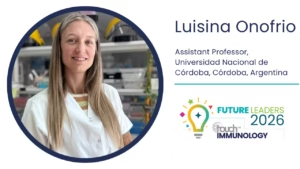
Dr Luisina Onofrio is Assistant Professor of Applied Immunology at the National University of Córdoba (UNC), and a post doctoral researcher at the Center for Research in Clinical Biochemistry and Immunology (CIBICI), UNC. Dr Onofrio is an emerging translational immunologist whose research explores how targeted therapies reshape T-cell biology and immune competence in autoimmune disease. Focusing on rheumatoid arthritis, she integrates metabolic and functional profiling to link molecular mechanisms with clinically relevant outcomes.
In addition to research, Dr Onofrio supervises trainees and contributes to academic training, public science communication, and global collaborative studies, including COVID-19 research. Her interdisciplinary background and international visibility position her as a leading voice in mechanistic immunology applied to patient care.
In this Q&A, Dr Onofrio reflects on what first drew her to translational immunology, the defining breakthroughs in her research, and the innovations that are driving the care of autoimmune disease forward.
New insights are added regularly, covering a broad range of subspecialties and evolving clinical scenarios. Sign up below for Free Access to the latest clinical updates in your specialty!
What inspired you to pursue a career in translational immunology?
My motivation to pursue a career in translational immunology has been shaped by both scientific curiosity and my experience working closely with patients. I initially trained in basic research, studying immune responses to Trypanosoma cruzi infection, which sparked my interest in understanding how the immune system behaves in different contexts. Over time, my growing involvement in clinical settings, particularly with patients with rheumatoid arthritis, reinforced my desire to connect mechanistic insights with real-world disease. I am especially driven by the possibility of generating knowledge that not only explains what we observe in patients, but also contributes to improving therapeutic strategies and patient outcomes.
Can you share a defining breakthrough in your research and how it impacted your field?
My research has consistently focused on how immune regulation impacts T cell function in autoimmune diseases. In earlier work, we explored the role of inhibitory receptors in shaping immune responses and influencing treatment outcomes. More recently, we demonstrated that JAK inhibitors alter the metabolic programming of CD8 T cells, impairing their functional capacity despite apparent activation. This finding provides a mechanistic link to the increased susceptibility to infections observed in treated patients and underscores the importance of understanding how targeted therapies affect immune competence beyond their intended effects. Ultimately, these insights may contribute to the identification of novel therapeutic targets and the development of safer and more effective treatment strategies.
What current innovations in autoimmune disease excite you the most?
I am particularly excited about advances that bring experimental models closer to human disease. The development of more physiologically relevant systems, such as organoids and patient-derived models, is transforming how we study immune responses in complex tissue environments. In parallel, emerging cellular therapies, such as CAR-T cells, are opening new possibilities for patients with severe autoimmune diseases by enabling more selective targeting of pathogenic immune populations. Together, these approaches are helping move the field toward more precise and safer treatment strategies.
More content in immunology.
Cite: Dr Luisina Onofrio on translating T-cell biology into improved autoimmune care: touchIMMUNOLOGY Future Leaders 2026. touchIMMUNOLOGY. 21 May 2026.
Disclosures: This short article was prepared by touchIMMUNOLOGY in collaboration with Dr Onofrio. No fees or funding were associated with its publication.