Presented at EULAR 2026, the first international evidence-based recommendations on imaging for the diagnosis and management of polymyalgia rheumatica aim to standardize clinical practice.

Polymyalgia rheumatica (PMR) is a common inflammatory condition, characterized by pain and stiffness in the shoulders, neck and hips that can significantly impair daily activities. There is no single diagnostic test for PMR, making timely and accurate diagnosis challenging and increasing the need for tools that support clinical decision-making.
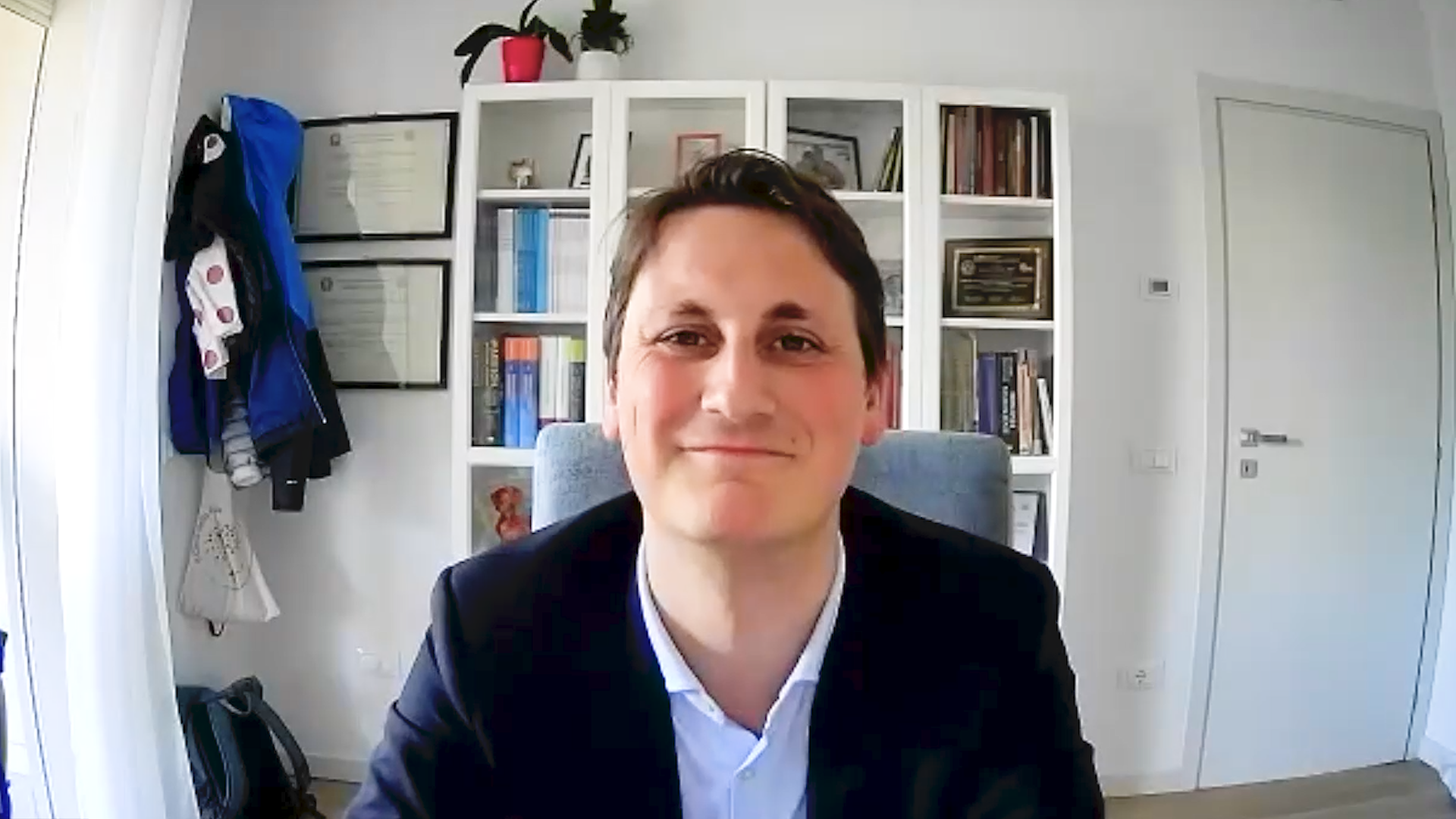
In this interview, Dr Milena Bond (South Tyrol health Trust, Bolzano, Italy) discusses the unmet needs in PMR care, the development of the first international evidence-based recommendations for imaging, and their potential to improve diagnostic accuracy and support more personalized patient management.
Abstract: International recommendations for the use of imaging in the diagnosis and assessment of polymyalgia rheumatica. EULAR 2026, June 3– 6, London, UK.
touchIMMUNOLOGY coverage of EULAR 2026
I am Dr Milena Bond, a rheumatologist based in Italy. I am also undertaking a PhD project in Paracelsus Medical University in Salzburg, Austria.
What unmet needs exist in the diagnosis and management of PMR?
PMR is one of the most common rheumatological conditions that we see in clinical practice; however, the diagnostic process is not that straightforward, partially because there is not a specific diagnostic test to rely on. Thus, clinicians have increasingly turned to imaging to assist in the diagnostic process, but there is a consistent heterogeneity across centers and countries.
What was the rationale for developing recommendations for the use of imaging in this indication?
As mentioned, imaging has been increasingly used to assist in the diagnosis and management of PMR, but there is a lot of heterogeneity across centers and specialists.
How were the recommendations developed, and what evidence informed them?
We started by convening an international task force of 30members across different countries, and we used the EULAR standardized operating procedures to ensure very high standards throughout the process. We started with 6 clinical questions that were converted into a PICO format. These were used to guide a systematic literature review, ensuring that we captured all of the relevant existing evidence. Based on the evidence and on the expert opinions, we developed three overarching principles and seven specific recommendations to guide clinicians in the use of imaging in PMR.
Could you give us an overview of the key recommendations established?
PMR remains largely a clinical diagnosis, and the initial clinical and laboratory evaluations remain the basis for all subsequent steps. Imaging should be used selectively to confirm diagnosis or relapse of PMR, according to the patient’s characteristics and profile. We introduced a three-level framework dividing patients according to their pre-test clinical probability of having the disease.
Imaging is particularly useful to confirm a diagnosis or relapse in patients with an intermediate pre-test clinical probability such atypical presentations or discordant clinical features and inflammatory markers.If needed, the different imaging modalities (e.g., ultrasound, MRI, or FDG-PET) should be used in a personalized, complementary and not hierarchical way. Another important aspect is that we do not recommend systematic screening for subclinical vasculitis for all patients who have PMR.
Overall, the first international recommendations try to homogenize how clinicians use imaging in clinical practice.
What would be the impact of these first international recommendations?
This will be the first evidence-based guidance identifying which patients are most likely to benefit from imaging. The recommendations will also encourage using imaging in a personalized way, according to the anatomical sites of physical manifestations and access to different imaging modalities at a local level.
Another important fact is that we have consolidated the available evidence on imaging and drafted a comprehensive research agenda to guide subsequent studies that are still needed in the field.
This content has been developed independently by Touch Medical Media for touchIMMUNOLOGY in collaboration with Dr Milena Bond. Views expressed are the speaker’s own and do not necessarily reflect the views of Touch Medical Media.
Cite: Imaging in polymyalgia rheumatica: New international recommendations explained. touchIMMUNOLOGY. June 22 2026.
Editor: Victoria Smith, Senior Content Editor.