Expert recommendations highlight patient education, psychosocial support, and personalized lifestyle interventions as essential components of comprehensive care.
Systemic lupus erythematosus (SLE) and systemic sclerosis (SSc) are complex autoimmune diseases that can significantly affect patients’ quality-of-life. Recognizing the importance of holistic care, recent EULAR recommendations highlight evidence-based non-pharmacological strategies to complement medical treatment and improve long-term outcomes.
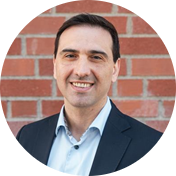
In this interview, we spoke with Dr Ioannis Parodis (Karolinska Institutet, Stockholm, Sweden) about the rationale for developing the recommendations, what information informed their development, the overall message and key recommendations established, and how they can be personalized to individual patient needs.
Abstract: EULAR recommendations for personalized non-pharmacological management of SLE and SSc. EULAR 2026, June 3– 6, London, UK.
touchIMMUNOLOGY coverage of EULAR 2026
What was the rationale for developing the recommendations on non-pharmacological management in SLE and SSC?
Firstly, we wanted to address the clinical needs for patients living with lupus or systemic sclerosis. These chronic autoimmune diseases have a great impact on the health-related quality-of-life of patients. Secondly, there was a clinical gap. Despite the existence and application of non-pharmacological care at different settings, it is not standardized to a sufficient extent, and it is also underused.
We therefore developed these guidelines to standardize the use of non-pharmacological strategies and to help incorporate them as an integral part of routine care for patients with lupus or systemic sclerosis.
How were the recommendations developed and what evidence informed them?
We assembled 25 experts into a task force under the EULAR framework, including physicians, nurses, occupational therapists, physiotherapists, and it also included patients.
We performed two separate systematic literature reviews to inform the recommendations; one for systemic sclerosis and one for lupus. We also performed a risk of bias assessment of all the literature that passed our filters. This resulted into the development of four overarching principles. We also developed a set of shared recommendations for lupus and systemic sclerosis, a set of recommendations specific to lupus and a set of recommendations specific to systemic sclerosis.
What was the overall message of the EULAR recommendations?
The overarching principles and the recommendations established that non-pharmacological management should be person-centred and participatory – involving patients. In addition, non-pharmacological therapy should be used as an adjunct to pharmacotherapy and not as a substitute where pharmacotherapy is necessary, and this was an important boundary that we established early on.
Could you summarize the key recommendations?
A pillar is patient education – this was identified in a substantial body of the literature as a way to improve outcomes and self-management. Patients often report that they do not feel prepared to participate in shared decision-making, due to a lack of adequate education and express a need for more knowledge about their disease and the available medications before they feel confident engaging in treatment decisions.
Another pillar is psychosocial intervention, which was important for patients with either lupus or systemic sclerosis. It is shown to improve depressive symptoms, anxiety, mood disorders, and physical activity, which improves not only function but also fatigue.
Smoking cessation is also recommended as a key intervention for both conditions. For patients with lupus, photoprotection is essential, as interactions between UV light and the skin can trigger immunological processes, causing flares. Avoidance of cold exposure is important, particularly in patients with systemic sclerosis, for the prevention of Raynaud’s phenomenon. In patients with systemic sclerosis, there was a focus on improving mouth opening through orofacial rehabilitation exercises and improving hand function using systemic steroids to mitigate puffiness in hands. Lymph drainage strategies were also found to help in a limited body of the literature.
How can the recommendations be personalized to individual patient needs?
It is important to involve the patient and learn what their individual needs are, and personalize your care strategy. In the literature that we reviewed, personalized management resulted in better outcomes for patients. We also know from clinical practice that when we individualize pharmacotherapy and non-pharmacological strategies to the patient, we achieve better outcomes.
Another aspect is that we need to identify the barriers to implementation of non-pharmacological management. Currently, the EULAR Non-pharmacological Treatment of Autoimmune Connective Tissue Diseases working group are identifying these and this will be the first step in establishing how to mitigate these barriers.
This content has been developed independently by Touch Medical Media for touchIMMUNOLOGY in collaboration with Dr Ioannis Parodis. Views expressed are the speaker’s own and do not necessarily reflect the views of Touch Medical Media.
Disclosures: Ioannis Parodis discloses consulting for AstraZeneca, GSK, Novartis, Viatris, UCB, Biogen, Roche, Aurinia, Otsuka, J&J, and BMS; consulting for AstraZeneca, GSK, Novartis, Viatris, UCB, Biogen, Roche, Aurinia, Otsuka, and BMS; and serving on advisory boards for AstraZeneca, GSK, Novartis, Viatris, UCB, Biogen, Roche, Aurinia, Otsuka, J&J, and BMS.
Cite: EULAR recommendations for personalized non-pharmacological management of SLE and SSc. touchIMMUNOLOGY. June 12 2026.
Editor: Victoria Smith, Senior Content Editor.