
Osteoarthritis

Osteoporosis is a common and clinically significant comorbidity in patients with autoimmune and inflammatory diseases. The disease contributes to an increased risk of fractures, chronic pain, and functional impairment, imposing a considerable burden on patients and healthcare systems alike. In this Q&A, Dr Elena Bischoff explores the prevalence and fracture risk of osteoporosis in these populations, the underlying mechanisms of bone loss, how chronic inflammation disrupts bone homeostasis, additional contributing risk factors, and current best practices for screening and management.

S3E3_Could senolytics change the treatment landscape of age-related diseases? In this episode, Nicky speaks with Prof. Georgina Ellison-Hughes from King’s College London about the groundbreaking field of senolytics and their potential to advance the treatment of age-related ...

Dr Nancy Lane (UC Davis, Sacramento, CA, USA) highlights the latest in lupus care, GLP-1 therapies for pain and comorbidities, and new tools for osteoporosis risk assessment—showing how cutting-edge research is giving rheumatologists more ways than ever to improve patient outcomes.

The ENX-CL-05-001 trial explores a novel apoptotic cell therapy for moderate-to-severe knee osteoarthritis. Professor Philip Conaghan discusses the disease’s clinical burden, current treatment gaps, and the study’s design, including patient selection and methodology. Professor Conaghan highlights the importance of identifying responder populations to better target emerging therapies and advance personalized approaches in osteoarthritis care.

Physician burnout is at a critical point. In this episode, Nicky speaks with Dr Alfred Atanda about why so many physicians are burning out and what can be done to change the trend. From personal experience to system-wide solutions, Dr Atanda shares valuable insights on improving physician well-being and building a more effective healthcare culture.

What if your medical degree could launch more than a clinical career? In this candid and compelling read, Dr Jon Edelson shares his lessons for early-career doctors ready to think beyond the bedside and explore the business of medicine.

In this episode, we explore the future of continuing medical education (CME) with the team behind touchIME. Hannah Fisher and Matthew Goodwin share insights into global and US trends, the importance of patient inclusivity and how educational outcomes are evolving to better measure the direct impact of learning on clinical practice and patient care.

Nominated Future Leader, Dr Tom Appleton, shares insights into his career, osteoarthritis research, and the role of immunology in shaping future OA treatments. In this interview, Dr Appleton discusses the importance of early intervention, the impact of synovial macrophage dysfunction, and emerging therapies that could revolutionize rheumatology. His work bridges clinical care and research to drive innovation in osteoarthritis management and autoimmune disease.
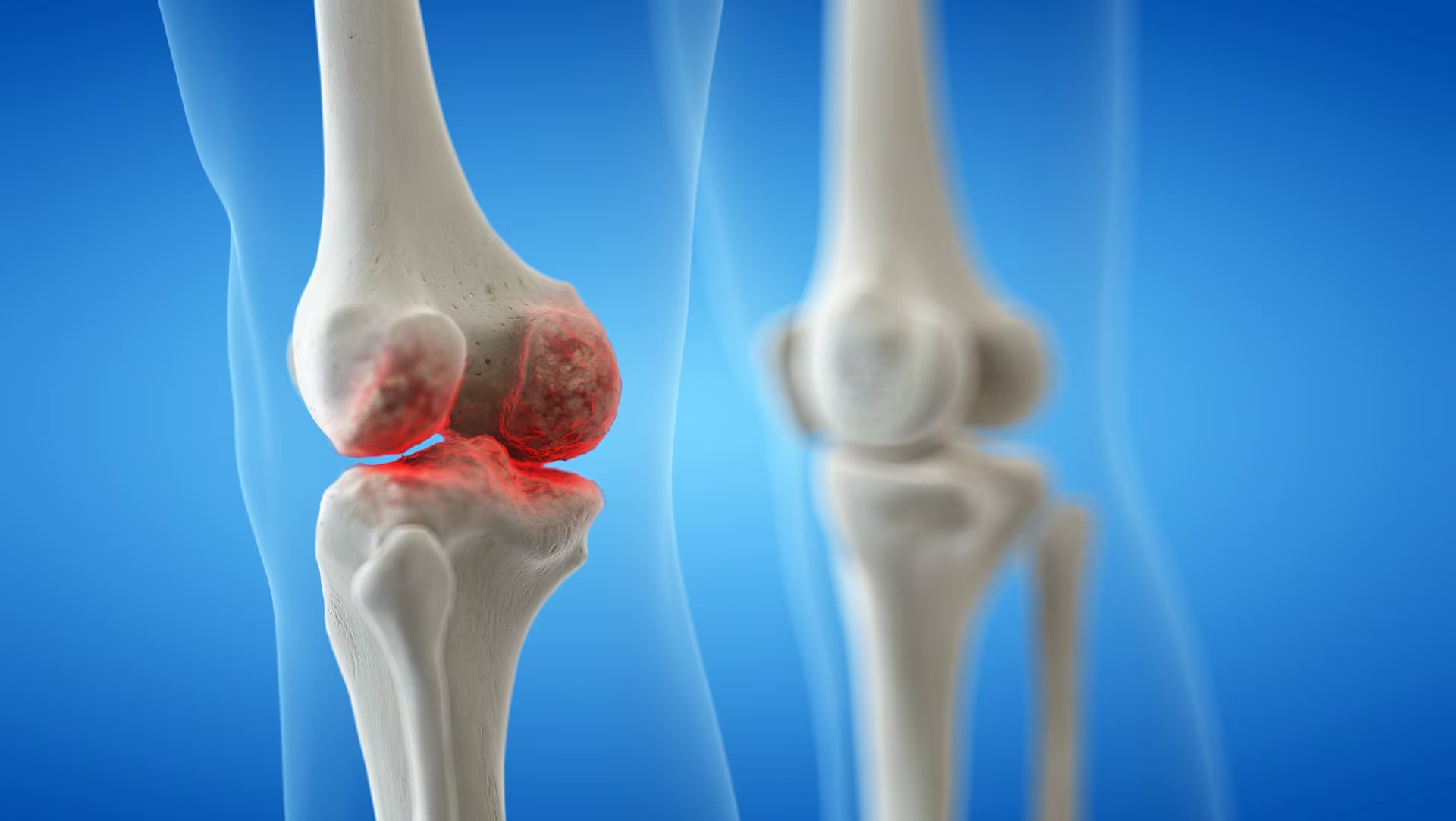
Osteoarthritis is increasingly recognised as a heterogeneous disease with diverse clinical phenotypes and molecular endotypes. In this expert Q&A, Professor Ali Mobasheri discusses how precision medicine—through clinical phenotyping and molecular endotyping—can guide targeted therapies, accelerate the development of disease-modifying treatments, and transform OA management into a personalised, proactive approach that improves patient outcomes.

At the 2025 WCO-IOF-ESCEO congress, Professor Philip Conaghan presented the safety and efficacy findings from the phase 2 study of LEVI-04 for the treatment of adults with knee osteoarthritis. LEVI-04 is a first-in-class, NT-3 inhibitor, which works by targeting the inflammatory pathways involved in joint degeneration and selectively inhibiting pro-inflammatory cytokines.

The COLOR trial is a single-centre, double-blind, randomised, placebo-controlled trial that aimed to investigate colchicine's efficacy and safety compared with placebo in people with hand osteoarthritis. touchIMMUNOLOGY were delighted to speak with Dr Anna Døssing (The Parker Institute, University ...
Hand osteoarthritis is a degenerative joint disease in which the smooth cartilage that covers the bone surfaces at the joints either is injured or wears over time. touchIMMUNOLOGY were delighted to speak with Dr Anna Døssing (The Parker Institute, ...

WCO-IOF-ESCEO took place between 4-7 May and brought all of the latest clinical findings and advances in osteoporosis, osteoarthritis and musculoskeletal diseases. We were delighted to talk with Editorial Board member Prof. Nicholas Fuggle (MRC Life Force Epidemiology Centre, University ...
Novel oral bisphosphonate formulations have been developed to address poor adherence to conventional bisphosphonates associated with the difficulty and inflexibility of dosing in osteoporosis preventative treatment. We were delighted to talk with Editorial Board member Prof. Nicholas Fuggle (MRC Life ...

A digital tool for self management in osteoporosis has recently been developed to reach older patients in their own homes using the Amazon Alexa app, to improve patient adherence and outcomes. touchIMMUNOLOGY caught up with Dr. David Scott (Deakin University, ...

Platelet Rich Plasma (PRP) therapy uses growth factors and cytokines in platelets to repair damaged cartilage, tendons, ligaments, muscle and bone. touchIMMUNOLOGY were delighted to speak with Professor Jean-François Kaux (University of Liège, Liège, Belgium) to discuss ...

Osteoarthritis is a degenerative disease of the joints resulting in pain, stiffness and an increased fracture risk in patients, the treatment paradigm has many unmet needs in terms of preventing progression, with anti-osteoporosis drugs failing to meet endpoints in clinical ...

Osteoporosis is often underdiagnosed and undertreated with difficulties in patient adherence to medication due to lack of symptoms until fracture. We were delighted to talk with Dr. Patricia Khashayar (Ghent University, Gent, Belgium) to discuss how rapid results from PoCOsteo ...
Log into your Touch Account
Keep track of your clinical interests and newsletter subscriptions.
Sign up with an Email
Or use a .
Register now for FREE access
Already registered? Login below.
